


👋🏽 Hello,
Welcome to the October edition of the SNAICC newsletter.
For those of you I’ve not met, my name is John Burton, usually the Executive Director Policy and Research. While our CEO Catherine Liddle most often opens our newsletters, I want to let you know that she is taking a leave of absence until the New Year for personal reasons.
While she is on leave the Executive Leadership Group, Board and Council is sharing the significant workload that falls to Catherine. As such, I will be taking on the acting CEO role until December.
The SNAICC team is continuing to work hard as usual, making sure the priorities of our members and sector are supported and amplified. There’s a lot going on between now and the end of the year and I’m excited to give you a snapshot of what’s been happening and what’s coming up.
We are very proud Project BIRD has been nominated in the 2026 Australian Human Rights Awards. BIRD was developed and delivered in partnership with the sector and members and this nomination is an acknowledgement of their excellence and expertise.
Our Early Years Support teams have been busy in Canberra, NSW and Victoria showing politicians the success that comes from supporting ACCO ECEC services.
Excitingly, the dates for SNAICC27 are now available! On September 14, 2027 we will gather in Tarndanya/Adelaide, on Kaurna country, for SNAICC’27. The theme for SNAICC’27 is Our Stories Light the Fire for Our Future.
The theme speaks to truth-telling and sharing the powerful stories of Aboriginal and Torres Strait Islander organisations, families, communities – which is part of the work we do every day.
The SNAICC Newsletter shares just some of stories. I hope you enjoy reading this edition.

New partnership to grow ACCO ECEC services
SNAICC has announced a three-year partnership with Coaxial, a philanthropic organisation founded by Dr Nicola Forrest AO to launch two innovative programs.
Nest and Nurture is a first-of-its-kind Aboriginal community-controlled model that makes it easier for communities to establish their own early childhood services.
The Workforce Innovation Fund is a tendered grants process that puts resources in communities’ hands to develop workforce solutions that work for them.
The programs are designed to help Aboriginal and Torres Strait Islander communities to establish early childhood services and access funds to put resources into developing the workforce.
ACCO early childhood educators know that the demand for ACCO-led early childhood services is far greater than the capacity of the current system to deliver.
Culturally safe early childhood education and care services improve outcomes, which is why ACCO early childhood services are experiencing unprecedented demand, particularly in regional communities.
Nest and Nurture is a first-of-its-kind Aboriginal community-controlled model designed to make it easier for communities to establish their own early childhood services.
The Workforce Innovation Fund is a tendered grants process that puts resources in the hands of communities to develop workforce solutions that work for them.
The grants will create solutions to workforce challenges unique to individual communities, while generating evidence about what works so successful community-led approaches can be strengthened, replicated and used to drive broader workforce and system reform.
WA already has a roadmap for child protection reform
SNAICC is calling on the WA Government, and all governments to listen and work with Aboriginal communities, families and invest in ACCOs to deliver community designed, led and delivered programs that we know work.
Our CEO recently wrote an op-ed published in The Australian. It has been published on our website here.
Recent news reports of the crisis in South Hedland, in Western Australia’s Pilbara, is a deeply distressing situation for the children, their families and the wider community. But there is a solution, informed by the WA Aboriginal community, that has been mothballed since September 2023.
Four years ago, the WA Government commissioned the WA Roadmap: 10-Year Roadmap Project to Reduce the Number of Aboriginal Children in Care. The roadmap is a comprehensive plan to address the drivers of children coming into contact with child protection
Those drivers include poverty, homelessness and housing insecurity, family and domestic violence, institutional racism and a lack of culturally appropriate family services. All those drivers require investment in family supports and services that are culturally safe and appropriate.
WA Commissioner for Children and Young People Jacqueline McGowan-Jones has said that it is a failure of entire systems.
In 2024, WA put just 4.4% of its child protection funding into family support services. Nationally, WA has the worst over-representation outcomes and does not have an independent accountability mechanism for Aboriginal children.
It’s a national disgrace that in a town with one of the highest median incomes in Australia, there are children living in abject poverty, at enormous risk. It is even more disgraceful when the Aboriginal community has been crying out to be heard about this for so long.
Failing to listen, act and invest in solutions that governments know exist is both a tragedy and national disgrace. Worse yet, the cost of those inactions is the lives of innocent children, families and communities who have begged to be heard.
National Commissioner for Aboriginal and Torres Strait Islander Children and Young People Sue-Anne Hunter is in WA hearing from children, families and services. Her insights and recommendations should be heard by all governments.
While those insights and recommendations will be invaluable, there is no excuse when the solutions are collecting dust in ministerial drawers.
Find out more about the WA Roadmap here
Taking Early Years Support to Canberra
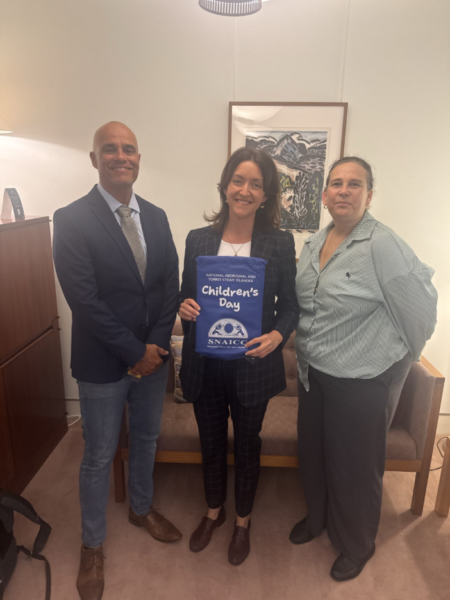
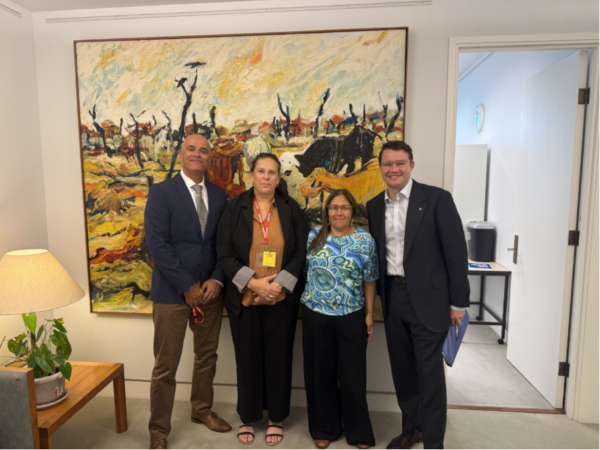
This week our team met with Ministers and Parliamentarians in Canberra to discuss SNAICC’s Early Years Support Program and other key areas of work. ACCOs are the lifeblood of early learning, especially in regional and remote areas where many already experience the impact of childcare deserts.
Our families nurture their children, our services support families, and EYS strengthens those services so children, their loved ones and educators can thrive. EYS helps around 2,200 families, including 1,700 children, access safe, high-quality early childhood education.
Executive Director of Childhood Development, Simon Fewings, Executive Director of the Office of the CEO, Mandy Taylor, our EYS WA Director Miranda Edwards and Tara Leslie, CEO of Cullunghutti Aboriginal Child and Family Centre, spoke to our nation’s decision makers on the importance of the work our services do for our families and how EYS supports that.
ACCOs must be partners as Thriving Kids rolls out
Thriving Kids begins rolling out this month. The initiative aims to identify developmental needs earlier in children under eight and connect families with coordinated support in community settings.
As it rolls out, SNAICC is calling on governments to properly resource Aboriginal Community Controlled Organisations (ACCOs) to help deliver it.
Because mob know mob, which is why families take their children to the services they trust. For many of our families, that is the local ACCO.
Around one in five Aboriginal and Torres Strait Islander children live with disability, compared with one in 12 children overall. ACCOs already provide culturally safe support, but much of their funding is short-term and inconsistent.
Thriving Kids is a chance to get the support right from the start. To get it right, ACCO ECEC organisations must be recognised as partners, not just stakeholders, in the delivery and rollout of the initiative.
That investment requires partnering with ACCOs and long-term investment in building the Aboriginal and Torres Strait Islander workforce.
To learn more, read SNAICC’s Thriving Kids Policy Paper.
Read the Thriving Kids Policy Paper
BIRD Project named a finalist in the 2026 Australian Human Rights Awards
When an Aboriginal and Torres Strait Islander child or adult survivor discloses sexual abuse, the first response they get matters. Too often, victim-survivors have been met with racism, disbelief, cultural insensitivity and little support.
The BIRD Project (Believe, Inquire, Respond to Disclosures) was built to change that. For this work, SNAICC has been named a finalist for the Community Award in the 2026 Australian Human Rights Awards.
Developed by SNAICC in collaboration with Yamurrah, a collective of Aboriginal and Torres Strait Islander experts working with victims and survivors of complex and collective trauma, BIRD is a co-designed training package that is trauma-aware, healing-informed and culturally appropriate. It prepares primary health care professionals to respond to disclosures in ways that are culturally safe. SNAICC is piloting the BIRD Training Package in five locations in 2025–26.
The finalists were chosen from more than 300 nominations, with 20 people and organisations recognised across five categories. SNAICC is one of four Community Award finalists. Moriarty Foundation’s Indi Kindi, an Aboriginal community-led early learning program in the Northern Territory, is also a finalist for the Human Rights Medal.
The winners will be announced on Thursday 10 December at the UTS Great Hall in Sydney, on Human Rights Day. The ceremony will also be livestreamed nationally.
Standing together at NSW Parliament for the early years
Closing the Gap starts with our children. In September, SNAICC’s Early Years Support team took that message to NSW Parliament.
Alongside leaders from community-led early childhood services, the team called for long-term funding, so Early Years Support can keep walking beside the services it supports.
The service leaders spoke about how Aboriginal-led programs are changing the lives of children and their families. Those programs need certainty to keep going.
The stakes are high in NSW. Productivity Commission data on Closing the Gap shows the state is not on track to meet the target of 55% of Aboriginal and Torres Strait Islander children starting school developmentally on track by 2031.
Early Years Support works alongside Aboriginal-led early childhood services in NSW, Victoria and Western Australia, and is now rolling out in South Australia. It helps services deliver culturally safe early education and care. An independent review last year found the program was supporting more than 2,200 children and families.
Continued support for Early Years Support has never been more important.
Why mindsets matter for early childhood reform
Watch on YouTube · Apple Podcasts · Spotify
In this episode of SNAICC Yarns, Executive Director of Communications, Mandy Taylor, yarns with Nat Kendall-Taylor, CEO of the FrameWorks Institute, about how mindsets shape the way Australians understand early education and care, and why shifting these beliefs matters for Aboriginal and Torres Strait Islander children, families, and communities.
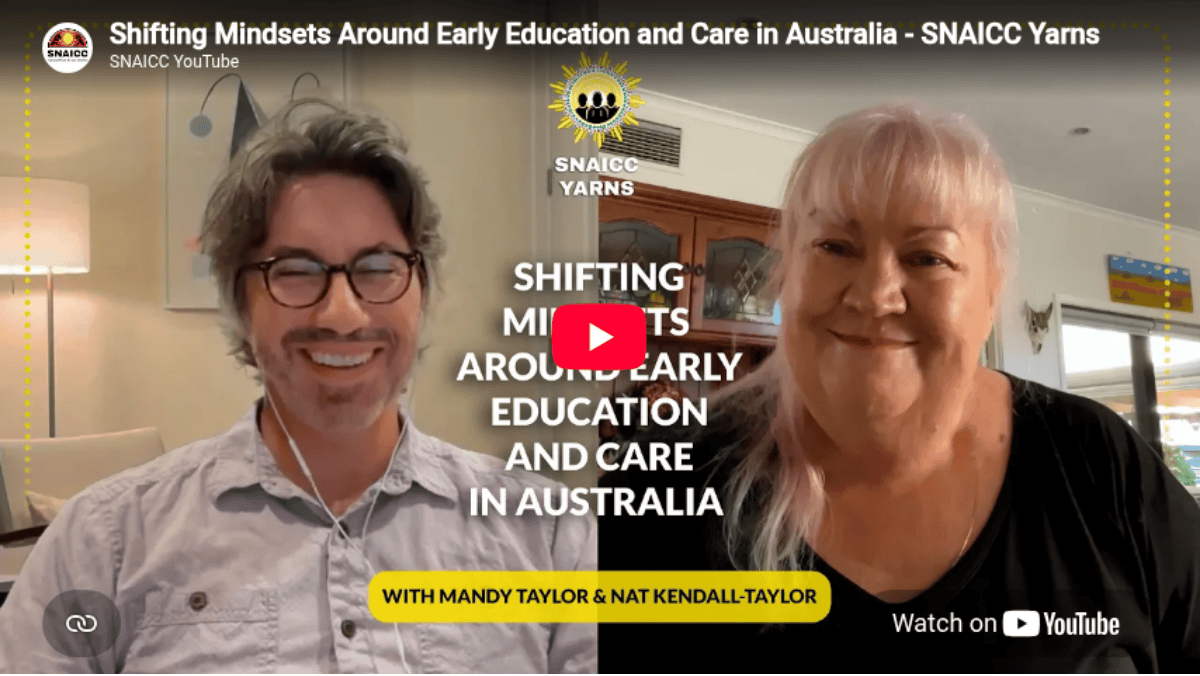
The conversation looks at mindset work more broadly: how shared beliefs, assumptions and dominant narratives shape the way people understand an issue, what solutions they see as possible, and where they believe responsibility lies. Mandy and Nat discuss how language and strategic communications can build public understanding, strengthen support for policy reform and help avoid deficit-based or “othering” narratives that limit meaningful change.
The episode also previews emerging findings from FrameWorks and SNAICC’s mindsets work, including the importance of activating collective responsibility and developing practical tools for organisations working with children, families and communities. It reminds us that the way we communicate can be a powerful tool for change, leading to more effective advocacy, smarter reform and better outcomes for children.
Keep the conversation going. Follow, subscribe and share this podcast to help amplify the voices of Aboriginal and Torres Strait Islander children, families and communities.
SNAICC’27: save the date for Adelaide
SNAICC’27 will be held from 14 to 16 September 2027 at the Adelaide Convention Centre, on Kaurna Country in Tarndanya/Adelaide.
SNAICC expects up to 2,500 delegates from more than 400 organisations. At that size, SNAICC’27 would be the largest Aboriginal and Torres Strait Islander focused conference ever held in Australia.
The conference brings Aboriginal and Torres Strait Islander organisations, practitioners, educators, researchers and young people together with governments, policymakers and non-Indigenous partners. Over three days, delegates share what is working in community, build connections across the sector and celebrate culture.
Registrations open on 1 March 2027. Sponsorship and exhibitor opportunities are open now.
Services families already know and trust
“It’s a really good environment for them to connect back to their culture and community.”
That is how Michaela, a parent of a child attending Noogaleek Children’s Centre, describes the service, one of the community-led services that SNAICC’s Early Years Support program works alongside.
Early Years Support backs community-led early childhood education and care services that Aboriginal and Torres Strait Islander families already know and trust. The program takes on the operational and administrative work that can pull educators away from children, so services can focus on teaching, care and culture.
Across NSW, Victoria and Western Australia, Early Years Support works with 76 Aboriginal community controlled organisations reaching more than 2,200 children and families, and is now rolling out in South Australia. An independent review by Deloitte found the program improves service quality and builds strong, culturally safe relationships, with 86% of services reporting stronger connections.
Those relationships take years to build. As SNAICC told NSW Parliament in September, long-term funding is what keeps that support in place.
Listen to Michaela, a parent of a child attending Noogaleek Children’s Centre
Boori Milumba: an investment worth building on
ACCO educators know our children who need more than a place in the room: more time, more support, more trust. Boori Milumba is built around supporting our children.
Run by Cullunghutti Aboriginal Child and Family Centre and co-developed with SNAICC, Parkville Institute and Social Ventures Australia, Boori Milumba is an Aboriginal-led early learning model offering intensive, culturally responsive education and care. Its three-year trial is nearing completion.
Evidence from the program shows that children’s average language scores rose by 7.9 points, a statistically significant gain. Cognitive scores have also started to rise from 79.1 per cent to 81.7 per cent.
Family trust is part of what makes this possible. Every family felt welcomed, and 88% felt like a collaborative partner with educators. That trust is what Aboriginal community controlled organisations build every day, and it keeps children taking part and ready to learn.
Boori Milumba is the example of what happens when you invest in ACCOs.
Read the Boori Milumba fact sheet
Yarning about what works, from the Kimberley to Victoria
Educators know the value of a yarn with someone who does the same work somewhere else.
In mid-September, SNAICC’s WA Early Years Support team brought early years educators together in Fitzroy Crossing and Derby for a community of practice.
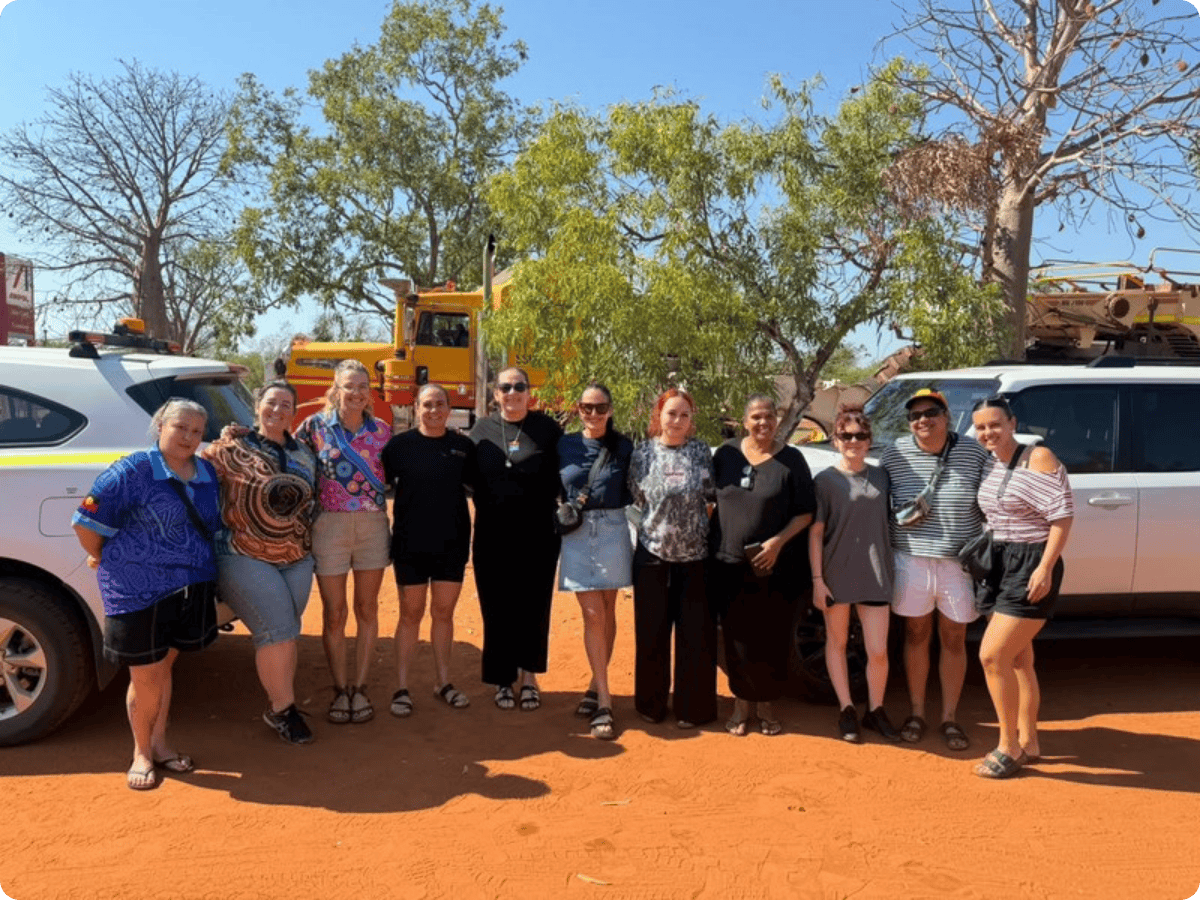
Staff from Yappera Children’s Service travelled from Victoria to join them. It was a special chance for services thousands of kilometres apart to connect, share knowledge and yarn about what works for Aboriginal and Torres Strait Islander children and their families.
Early Years Support works alongside Aboriginal community controlled early childhood services in NSW, Victoria and Western Australia, and is now rolling out in South Australia. It takes on operational and administrative work, so educators can focus on children.
Communities of practice build something else services need: connection with each other. The independent review of Early Years Support found the program reduces isolation and builds networks between Aboriginal community-controlled services.
Authority, connection and transition: Reflections from the 2026 AbSec Conference
In August, SNAICC joined mob, ACCOs, Elders, practitioners and national leaders on Biripi Country in Port Macquarie for the 2026 AbSec Conference. Mob know mob: that was the clear message. Our children are strong, proud and deadly when they are connected to their Country, culture and community.
SNAICC’s Acting Manager, ACCO Transformation, Sid Williams, said transition must go beyond handing over services, contracts or responsibility. It must also shift resources, authority and power to ACCOs, as SNAICC’s Sector Transformation Principles Framework sets out. SNAICC Chair and VACCA CEO Aunty Muriel Bamblett, and Wendy Moore from the Tasmanian Aboriginal Centre, spoke about Delegated Authority.
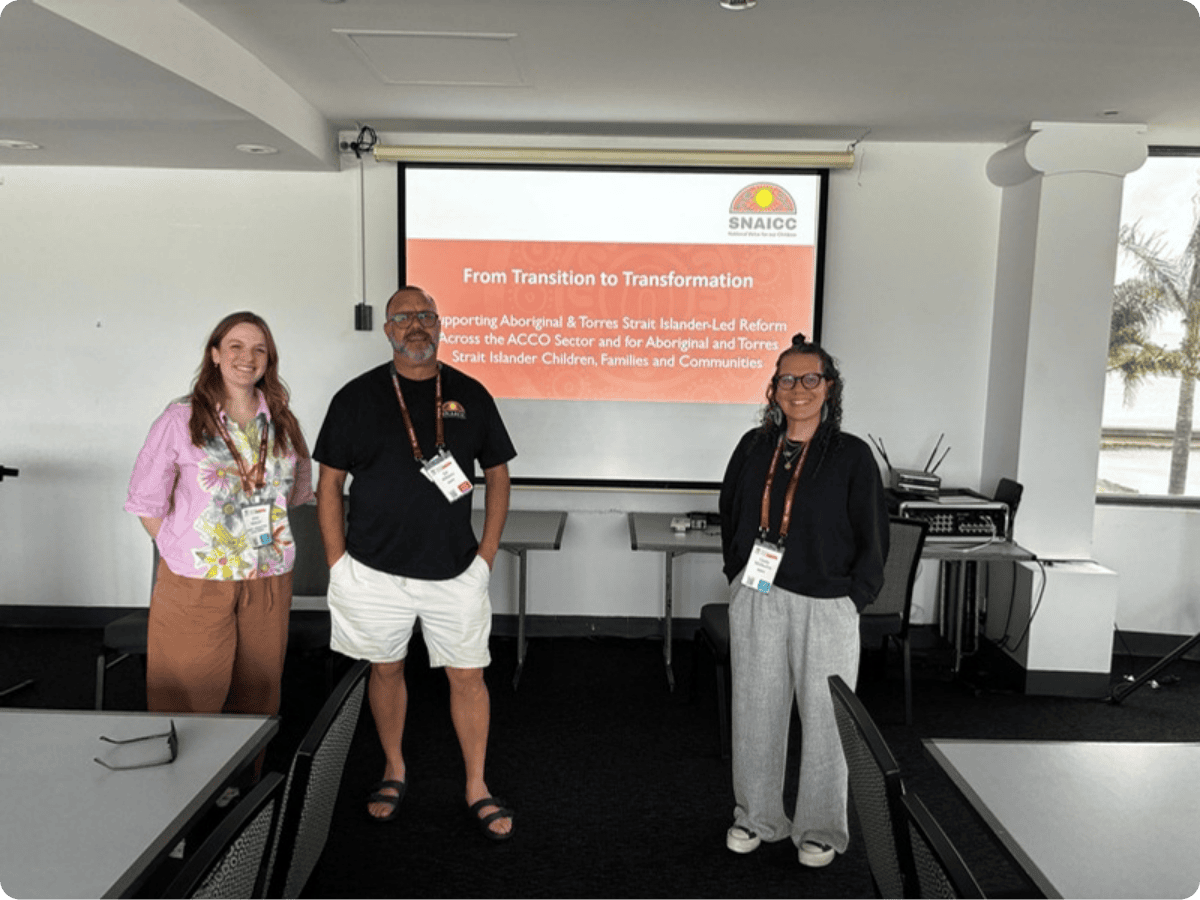
Usually, a government department makes the key decisions for an Aboriginal child on a child protection order. Under Delegated Authority, an ACCO makes them instead. The organisation works with the child’s family and community. At VACCA, the reported rate of children returning home rose from 12 to 24 per cent.
The strength, knowledge and leadership already exist in communities. The job is to listen, invest and make room for that authority to lead. SNAICC thanks AbSec for bringing mob together.
Read the Sector Transformation Principles Framework
Yoga cards, Children’s Day bags and SNAICC’27 draw a crowd at ECA
The Bushland Animal Yoga Cards, Children’s Day bags and SNAICC’27 drew strong interest at SNAICC’s stall at the Early Childhood Australia (ECA) National Conference.
The conference brought early childhood educators from across the country to the Melbourne Convention and Exhibition Centre from 30 September to 3 October. This year’s theme, Holding the Past, Creating the Future, asked the sector to reflect on what it carries forward, with one strand dedicated to Treaty and truth-telling in the early years.
SNAICC’s National Workforce Manager, Miranda Edwards, presented a session on Boori Milumba, alongside staff from Cullunghutti who deliver the program on the NSW South Coast.
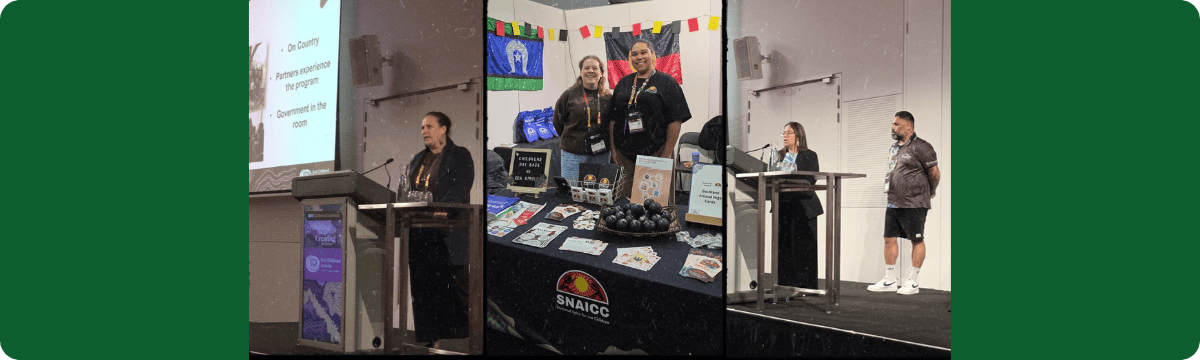
The conference also heard from SNAICC’s members, including Birrelee MACS on why culture is everybody’s business, as well as Bubup Wilam Aboriginal Child and Family Centre as a model of excellence.
The cards were developed by SNAICC’s Early Years Support team for children under five. Alongside balance, flexibility, self-regulation and concentration, the poses build connection to culture, Country and self. The cards align with all five outcomes of the Early Years Learning Framework and come with an overview guide and a 20-minute lesson plan.
Each set costs $40. To reach as many services as possible, orders are limited to four sets.
Children’s Day 2026 bags are also still available while stock lasts. Inspired by the theme Living Our Truth, each $10 bag holds an activity book, the storybook The Moon Story, stickers and craft items. Bags are sold in orders of five or more.
Worker Retention Payment (WRP) Extension Update
In mid-June, the Australian Government Department of Education (AGDE) extended the Early Childhood Education and Care (ECEC) WRP grant opportunity to 30 June 2028. The ECEC Worker Retention Payment Guidelines have been updated with the extension information. Key information includes:
- In mid-October, the AGDE will contact existing WRP grantees with a grant extension offer
- Complete the grant extension offer or enter into a new grant agreement by mid-December 2026 to continue receiving WRP payments until 28 February 2027
- From 1 December 2026 to 28 February 2027 is a grace period for existing WRP grantees to update their workplace instrument/s to be compliant with the updated guidelines and to submit for review and approval.
If you need support with your grant extension or it’s your first time applying, SNAICC are here to help. Contact us at workforce@snaicc.org.au
Download the ECEC WRP Guidelines (October 2026)
First Nations Languages in Early Childhood Education and Care
Cox Inall Ridgeway is inviting expressions of interest in a national research project being delivered for SNAICC – National Voice for our Children and First Languages Australia.
The project is exploring how Aboriginal and Torres Strait Islander languages are used and taught in early years education, the benefits this can bring for children’s development, identity and wellbeing, and the practicalities that support or limit language use.
We are interested in hearing from teachers, Elders, parents, carers, service leaders and other people with relevant experience or perspectives. Participants will be invited to take part in an online yarning-style interview, expected to take approximately 60 minutes. We are seeking a mix of voices from a variety of locations and roles.
Participants can choose not to answer any question or withdraw at any time. Any information you share will be de-identified in reporting.
To express your interest or for more information, please contact Conal Thwaite at information@coxinallridgeway.com.au.
Journey to Big School returns to BADAC Gordon
Following a Journey to Big School (J2BS) workshop at BADAC’s Yirram Burron service last November, the Learning & Development team returned to Gordon to support a new cohort. The workshop focused on strengthening transition partnerships between BADAC Gordon’s kindergarten on-site service and local primary schools across the Ballarat region.
Bringing together school leaders, transition teachers and allied health professionals, the workshop helped build relationships, deepen collaboration and strengthen connections across education and community services, with participants recognising that there is no one-size-fits-all approach to creating positive transitioning experiences.
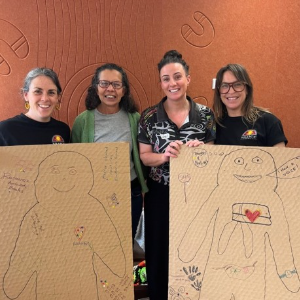
A strong theme throughout the workshop was that the child must remain at the centre of all transition planning. Participants acknowledged the importance of the work undertaken by schools, early years services and allied professionals, and the collective responsibility to support children as they move into school. The session highlighted the strong momentum building across the region and the value of place-based approaches that bring communities together to improve outcomes for children and families.
Curious about Journey to Big School? Listen to Bridget share about what it means to their children, families and community.
National Transition Framework Progress
During September, the ACCO Transformation team progressed the work in co-designing the National Transition Framework, bringing together ACCOs, peak bodies and working in collaboration with our partners.
We have continued in the collective development of the Framework, with the overarching intent that a National Approach provides the bones and local self-determination gives Transition heart. As part of the development of the Framework, the team has listened to members about what else is needed to support Transition being done well, in a way that is culturally safe and community led. Identifying opportunities to develop companion tools to support the National Transition Framework.
The next steps are for the full Framework to be endorsed by the National Transformation Sub-Committee, ahead of a proposed launch at the SNAICC National Transition Transformation Summit in early 2027.
For more information, check out our Sector Transformation Principles or listen to our episode of SNAICC Yarns.


SNAICC acknowledges the Traditional Custodians of Country throughout Australia and their continuing connections to land, waters, culture and communities.
We pay our respect to Elders both past and present.