

What is Children’s Day?
Living Our Truth | National Aboriginal and Torres Strait Islander Children’s Day 2026
Tuesday 4 August 2026
National Aboriginal and Torres Strait Islander Children’s Day is an annual celebration of Aboriginal and Torres Strait Islander children growing up strong in culture and connected to family, community and Country.
National Aboriginal and Torres Strait Islander Children’s Day is an opportunity for all Australians to recognise and celebrate the strength, pride and potential of Aboriginal and Torres Strait Islander children. The day is a recognition of culture as a source of strength, resilience and identity for children, and affirms that these connections are fundamental to a child’s wellbeing, development and lifelong outcomes. It calls on all of us to listen to and value children’s voices, now and into the future, while deepening understanding of the role that families, communities and culture play in raising children who are safe, supported and thriving.
Children’s Day is led by SNAICC – National Voice for our Children, the national Aboriginal and Torres Strait Islander peak body representing children, young people and families. Each year, SNAICC hosts a national flagship Children’s Day event in partnership with a local community, bringing together children, families, Elders, leaders and communities to celebrate children and elevate the strength, priorities and leadership of community.
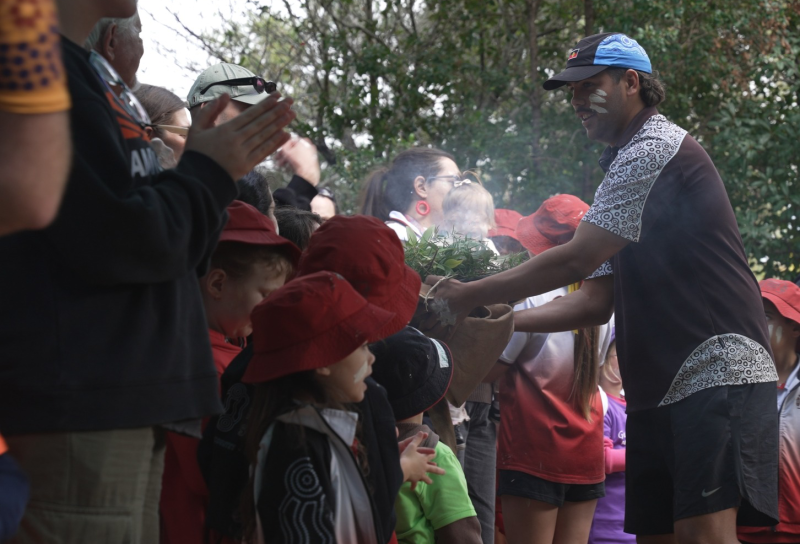
In 2025, the Children’s Day flagship event was held on Gumbaynggirr Country at Kulai Preschool Aboriginal Corporation with Aunty Julie Carey, the Gumbaynggirr community and the students and educators of Kulai Preschool, Gumbaynggirr Giingana Freedom School and Gummyaney Aboriginal Preschool. The celebration was filled with joy, as children danced their songs, spoke their language and were held strong by mums, dads, aunties, uncles, nanas and grandpas. It was a living example of what we celebrate and promote every year on National Aboriginal and Torres Strait Islander Children’s Day.
Across the country, thousands of early learning services, schools, libraries, sporting clubs, organisations and communities lead their own Children’s Day celebrations in ways that reflect and centre local culture, knowledge and priorities. These celebrations take many forms, including storytelling, cultural learning, art exhibitions, music festivals, sports days and community gatherings, creating spaces where children are seen, heard and celebrated for who they are and the futures they carry.
SNAICC supports these community-led celebrations by developing and sharing resources, including more than 20,000 Children’s Day bags each year, alongside event listings, promotional materials and activity ideas. Together, these supports enable hundreds of events across Australia and ensure Children’s Day is accessible and visible; celebrating children, culture and connection in every corner of the country.
National Aboriginal and Torres Strait Islander Children’s Day is a national day of celebration where our children take centre stage and where their strengths, voices and identities are recognised, uplifted and celebrated across the country.
National Aboriginal and Torres Strait Islander Children’s Day creates space for Aboriginal and Torres Strait Islander children to be seen, heard and celebrated for who they are, their belonging to family and community and the futures they are shaping as the next generation of leaders.
For Aboriginal and Torres Strait Islander children, culture is a source of strength, resilience and wellbeing. Deep and enduring connections to family, community and Country support children’s identity, social and emotional wellbeing, development and lifelong outcomes. Children’s Day honours the knowledge, practices and community leadership that have sustained generations of children and continue to support Aboriginal and Torres Strait Islander children to grow up safe, strong and supported today.
Children’s Day also acknowledges the ongoing impacts of colonisation that see Aboriginal and Torres Strait Islander children, young people, families and communities navigating systemic inequality, racism, disconnection from culture and community, intergenerational trauma and barriers to safety, housing, health, education and opportunity. These realities continue to shape outcomes for many children, young people and families across the country and bring to light the need for sustained, coordinated change across systems, policy and practice.
Children’s Day brings these realities into focus while amplifying the voices, experiences and aspirations of Aboriginal and Torres Strait Islander children, young people, families and communities. It reinforces the importance of Aboriginal and Torres Strait Islander-led solutions and community-controlled approaches that are grounded in culture, strengthen self-determination and support children to remain connected to kin, community and Country. Evidence continues to show that Aboriginal and Torres Strait Islander community-controlled organisations play a critical role in supporting better outcomes for Aboriginal and Torres Strait Islander children, young people, families and communities.
Children’s Day is both a celebration and an opportunity for all Australians to listen to and value children’s voices, deepen understanding of the role culture plays in children’s wellbeing and stand alongside Aboriginal and Torres Strait Islander children, young people, families and communities to ensure every child grows up safe, strong, connected and supported to reach their full potential.
National Aboriginal and Torres Strait Islander Children’s Day was first established on 4 August 1988 during the Australian Bicentenary year.
The Bicentenary observed 200 years since the arrival of the First Fleet in 1788; the beginning of sustained British occupation of Australia. While it was promoted nationally as a celebration, for Aboriginal and Torres Strait Islander peoples it was a time of mourning, protest and truth-telling. Across the country, Aboriginal and Torres Strait Islander peoples and allies came together to challenge the narratives that ignored invasion, dispossession, violence and the ongoing impacts of colonisation. Through marches, protests and gatherings, communities across the country asserted that sovereignty was never ceded and reaffirmed the enduring strength, survival and resistance of Aboriginal and Torres Strait Islander peoples, cultures and communities. These gatherings also gave momentum to calls for treaty and the recognition of Aboriginal sovereign rights, including through the Aboriginal Sovereign Treaty ’88 campaign and the Barunga Statement.
It was in this context that National Aboriginal and Torres Strait Islander Children’s Day was established by SNAICC – National Voice for our Children as an act of cultural assertion, resistance and hope for future generations. At a time when Aboriginal and Torres Strait Islander peoples were calling for justice, recognition and self-determination, Children’s Day created a national platform to celebrate Aboriginal and Torres Strait Islander children and affirm their rights, identities and importance within family, culture and community. The establishment of Children’s Day recognised the strength, resilience and cultural identity of Aboriginal and Torres Strait Islander children, while asserting that children have the right to grow up safe, supported and connected to family, community, culture and Country. From its beginning, Children’s Day has stood as both a celebration of children and a commitment to protecting the cultural strength, wellbeing and futures of generations to come.
The choice of 4 August carries deep and layered significance. Historically, the date was used as a shared birthday for Aboriginal and Torres Strait Islander children of the Stolen Generations who had been forcibly removed from their families and did not know their birth dates. In reclaiming this date, Children’s Day acknowledges the pain and ongoing impacts of removal policies while honouring the strength, survival and resilience of Stolen Generations survivors, families and communities. It situates the day in truth-telling, healing and remembrance, while affirming the right of Aboriginal and Torres Strait Islander children to grow up connected to family, community, culture and Country. Children’s Day stands as a continued commitment to protecting future generations from the harms of disconnection and ensuring Aboriginal and Torres Strait Islander children are supported to grow up safe, strong, connected and thriving.
Since 1988, Children’s Day has grown into a national movement led and shaped by Aboriginal and Torres Strait Islander communities across Australia. Each year, thousands of early learning services, schools, organisations, sporting clubs, libraries and community groups hold celebrations that reflect and centre local cultures, languages, knowledge and ways of coming together. These celebrations create spaces where Aboriginal and Torres Strait Islander children are seen, heard and celebrated for who they are, while strengthening culture, connection and community across generations.
Today, Children’s Day continues to evolve while remaining firmly grounded in the purpose on which it was founded; a national celebration of Aboriginal and Torres Strait Islander children growing up strong in culture and connected to family, community and Country, and a national moment for truth-telling, reflection and collective responsibility.
Children’s Day continues to affirm the rights, voices and leadership of Aboriginal and Torres Strait Islander children and calls on all Australians to support the self-determined, community-led solutions that ensure children grow up safe, strong, connected and thriving.
For more than three decades, National Aboriginal and Torres Strait Islander Children’s Day themes have reflected the voices, strength, cultures and aspirations of Aboriginal and Torres Strait Islander children, families and communities across the country.
- 2025: Little Footsteps, Big Future
- 2024: Strong in Culture, Stronger Together
- 2023: Little Voices, Loud Futures
- 2022: My Dreaming, My Future
- 2021: Proud in Culture, Strong in Spirit
- 2020: We are the Elders of Tomorrow, Hear Our Voice
- 2019: We Play, We Learn, We Belong
- 2018: SNAICC – Celebrating Our Children For 30 Years
- 2017: Value Our Rights, Respect Our Culture, Bring Us Home
- 2016: We All Belong
- 2015: Little People, Big Futures
- 2014: Kids in Culture – Strong, Proud, Resilient
- 2013: Right Here, Right Now. Our Rights Matter
- 2012: Our Children, Our Culture, Our Way
- 2011: From Small to Big: Growing Stronger Every Day
- 2010: Value My Culture, Value Me
- 2009: Good Child Protection: We Do It Better Together
- 2008: Nurturing Our Children to Flourish
- 2007: Raise Children Strong in Culture – Pathways to Healing and Revival
- 2006: My Culture Is Me – I Am Proud and Strong
- 2005: Foster and Kinship Carers – Keeping Kids Connected to Community, Family and Culture
- 2004: One Childhood – One Chance – Let’s Not Take a Chance on Our Future – Invest in Our Future Leaders
- 2003: Break The Silence – Protect the Kids – Heal the Perpetrators
- 2002: Tracks In the Sand – A Path to Self-Determination
- 2001: We Are Watching and Learning from You – Make Us Proud of What You Do
- 2000: Celebrating Our Children’s Future – Cultural Inheritance, The Right of Every Indigenous Child in Australia
- 1999: Elders and Children: The Circle of Life – Sharing Culture, Knowledge and Wisdom
- 1998: Heart For Our Community: Teach, Love and Learn Our Children
- 1997: Bring Them Home
- 1996: Unity Is Our Future
- 1995: Never Again. Break The Chains
- 1994: Children, Our Dreaming – Keep Our Families Together
- 1993: Their Future, Our Responsibility
- 1992: My Family, Where Are You?
- 1991: The Stolen Generation – Where Are They Now?
- 1990: We Don’t Make the Problems – Why Must We Pay?
- 1989: Our Children, Our Future – Let’s Protect and Educate Them
- 1988: Return Our Kids in 1988 – Stop the Cultural Genocide
The themes collectively tell a story of children’s voices, culture and community, and of the enduring importance of creating strong, safe and supportive environments where Aboriginal and Torres Strait Islander children can thrive now and into the future.
Share your Children’s Day celebrations
Children’s Day is a community-led national celebration of Aboriginal and Torres Strait Islander children.
Sharing your celebration helps amplify the voices, strengths, joy and experiences of children, families and communities across the country, and contributes to a wider national recognition of the importance of culture in children’s lives.
You can:
- register your event online, so your celebration is visible to others and contributes to the national picture of Children’s Day activities happening across the country,
- share photos, stories or videos on social media from your event to showcase how your community is celebrating children (make sure you tag SNAICC),
- highlight children’s voices, perspectives and experiences, to make sure children are centred in how the celebration is represented and shared, and
- connect with your community and networks by sharing what you did, what you learned and how you came together to celebrate children, culture and community.
Whether you’re hosting a small gathering, a school activity, a cultural event or a large community celebration, every Children’s Day celebration matters.
Register your event, share your stories and help celebrate the strength, culture and voices of Aboriginal and Torres Strait Islander children across the country.
Join the National Celebration
Children’s Day is an opportunity for all Australians to celebrate the strength, pride and potential of Aboriginal and Torres Strait Islander children.
By taking part, you are supporting children to grow up safe, strong, connected to culture and proud of who they are, and contributing to a shared commitment to ensure every child is supported to thrive.