



👋🏽 Werte, March has been a very busy month here at SNAICC. This month we saw legislation for the National Commissioner legislation pass the Senate that has powers to hold government to account. We also joined forces with Allies for Children to call for urgent reform in OOHC and to urge governments to shift resources from mainstream providers to ACCOs to ensure culturally safe delivery of care and ensure our children remain connected to Country, community, kin and culture. While at the event, we also launched the principles that can guide this transition and transformation. These principles help underpin the transition from mainstream providers to ACCOs. March was also Women’s History Month and at SNAICC we have taken the time to reflect on the Deadly women that have shaped the ACCO sector. I often speak of Grandmothers Law as the force that shapes the love and care of our children. Grandmothers Law is what ensures that our children grow strong, healthy and deadly. It is key to closing the gap, and it is the force that underpins our advocacy. As we enter the Easter long weekend in what is a difficult and uncertain time, let us reflect on what we can and have achieved through our collective efforts, and take the time to reflect on our love of our kin, our culture, our languages, our Country and all the Deadly people in our lives. |

Landmark legislation empowers the National Commissioner to hold governments accountable
Realising a long-held aspiration of our sector and leaders, legislation backing in the National Commissioner for Aboriginal and Torres Strait Islander Children and Young people passed in Federal Parliament.
The legislation means that the National Commissioner has the authority to safeguard our children and families and hold governments accountable.
With Aboriginal and Torres Strait Islander children still ten times more likely to be in out-of-home care, and the links between child protection and youth justice continuing to grow, the need for strong, independent oversight has never been more urgent.
The legislation reflects a long-standing priority of the Family Matters campaign and aligns with key national reform efforts, including Safe and Supported: Australia’s ten-year national framework for child and family wellbeing.

National Aboriginal and Torres Strait Islander Children and Young People Commissioner Sue-Anne Hunter after the Bill passed the Senate. Credit: NITV News
Closing the Gap not just government business — Allies taking action
Allies for Children and the First Nations NGO Alliance, in partnership with SNAICC, gathered at Parliament House during the March sittings to demand urgent reform to the out-of-home care system and action to reach Target 12 under Closing the Gap.
“The Allies for Children are not waiting for Government to take the lead to address overrepresentation of our children in OOHC. It’s bold, it’s courageous and it’s necessary to see target 12 achieved.” Catherine Liddle
As a collective, and in partnership with ACCOs, we are working together to return children to family, kin and community and strengthen connection to culture through the transfer of services from mainstream organisations to ACCOs. This includes shifting resources and responsibility from mainstream services to ACCOs, so they can better support their communities.
Allies for Children represents around 15 per cent of mainstream child and family services nationally and are collectively responsible for the care of approximately 1,900 Aboriginal children.
“We need more organisations to do the right thing by the Aboriginal and Torres Strait Islander children in their care and start the journey to transition, that’s why we have launched our Transformation Principles Framework, to help drive structural change.” Catherine Liddle
SNAICC Youth Voice Advisory Group member Jaharn Mundy-Drazevich spoke powerfully at the event of his experience in care and the difference support from an ACCO made to his identity and connections.
We hope to see more organisations joining the Allies work and committing to reverse the unacceptable rates of Aboriginal and Torres Strait Islander children entering the child protection system and out-of-home care.

Catherine Liddle speaks at the Allies for Children launch in Canberra (top left); SNAICC’s Sector Transformation guide launch (bottom left); SNAICC Youth Voice Advisory Group member Jaharn Mundy-Drazevich spoke powerfully at the event of his experience in care and the difference support from an ACCO made to his identity and connections. (Right)
Transformation principles launched
At the Parliamentary event, SNAICC launched the Transformation Principles to support mainstream organisations to shift child protection services to ACCOs, strengthen community-controlled capacity, and align systems with Closing the Gap commitments.
As Life Without Barriers CEO Claire Robbs said at the event, the Principles provide a framework for non-Indigenous organisations to form genuine partnerships with ACCOs and work towards transitioning children.
You can read more about the work of the small but mighty Transformation team in the article below.
Read the Transformation Principles Framework here
Walking Together on Country: Reflections from 2025 and the path ahead in 2026
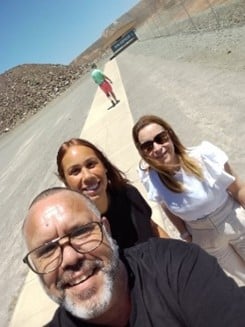
Transformation consultations in Kalgoorlie WA
Throughout 2025, Nadia and Sid, from SNAICC’s ACCO Transformation team spent less time behind desks and a whole lot more time on Country. We walked
alongside communities, led by culture, guided by Elders, and kept in check by community authority (as we should be).

Sunset in Victoria’s Gippsland
Across 22 communities, we showed up for on‑Country yarns creating culturally safe spaces where stories flowed, listening went deep, and no one pretended this was just another “consultation.”
These yarns were a continuation of relationships — some long‑standing, some just beginning. They were about trust, laughter, hard conversations, shared meals, and shaping the way forward (recommendations) grounded in local cultural knowledge, authority, strengths, and aspirations.
We walked alongside the SNAICC National Transition Sub-committee, supporting the development of their Terms of Reference and shaping strong cultural governance and collective leadership to keep us moving the right way.
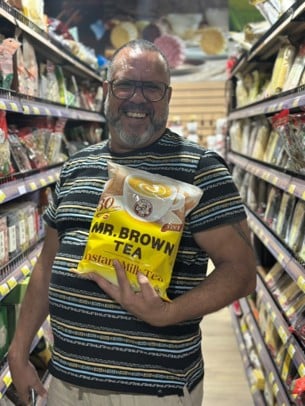
Sid grabs a snack and a new nickname — Mr Brown Tea
We also sat down with partner organisations like Life Without Barriers, Uniting NSW/ACT, and the Local Community Services Association, yarning about what transition partnerships might look like, and explored shared pathways.
The scale of the work was big. We were on the road for 39 out of 52 weeks, living out of suitcases, chasing flights, eating too many snacks, and proving that being present, visible, and accountable to community isn’t just talk – it’s a commitment.
In 2026, the work shifts gears from listening to walking forward together.
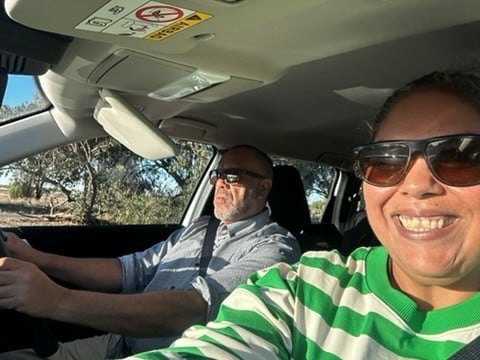
‘Are we there yet?’ Nadia Currie and Sid Williams travelled throughout 2025 to help develop SNAICC’s Sector Transformation Principles Framework
That means heading back to HIPPY and Connected Beginnings sites, delivering culturally responsive training alongside the Learning and Development team, and progressing a National Transition Framework that reflects what communities have told us not what we think sounds good.
We’ll also be focusing on workforce strategy, readiness guides and tools, and strengthening the Life Without Barriers Community of Practice and practice guide, supporting organisations to become genuinely culturally ready to transition in ways that honour self‑determination, community authority, and the fact that there’s no one‑size‑fits‑all.
Read the Sector Transformation Principles Framework Here
Closing the Gap: Back what works before it’s too late
The latest data from the Productivity Commission is deeply concerning, with no state or territory making progress across all targets related to the wellbeing of Aboriginal and Torres Strait Islander children.
The update reveals that:
- birthweight outcomes have moved from being on track to now showing no improvement from the baseline year
- a continuing backward trend in developmental outcomes and school readiness,
- worsening outcomes for children in out-of-home care (OOHC).
To see progress either stalling or declining is not only alarming but is a fundamental failure to close the gap, because closing the gap starts with our Children.
We already know what works and that’s investment in community-controlled services.
There is a wealth of programs that are working on the ground, such as Connected Beginnings and Early Years Support programs show that community-controlled approaches work.
However, government support of these programs is haphazard, with cyclical short-term funding which undermines the capacity to support growth.
You can read our statement here
Aboriginal and Torres Strait Islander peak body to end family violence launched
The federal government and the Coalition of Peaks this month launched Our Ways Strong Together, a new Aboriginal and Torres Strait Islander national peak body for family, domestic and sexual violence.
The new peak body brings together Aboriginal community-controlled organisations, including specialist family, domestic and sexual violence services, legal and health services and peak bodies, under a national umbrella.
Aunty Muriel Bamblett said family, domestic and sexual violence requires a coordinated national response, and that community-controlled services know what works.
Read our media statement on Our Ways – Strong Ways – Our Voices and learn more about the plan on our website.
SNAICC calls for an immediate national response to youth justice
Earlier this month, SNAICC’s CEO Catherine Liddle gave evidence to the National Inquiry into Australia’s Youth Justice and Incarceration System, warning that tough-on-crime policies are harming children, entrench criminal behaviour and leave communities less safe.
SNAICC has urged the federal government to launch a nationally coordinated action plan with the states and territories to urgently reform failing child justice systems. The calls coincide with new data from Queensland and Tasmania revealing increased numbers of Aboriginal and Torres Strait Islander children in youth detention. Alongside renewed calls for WA’s Unit 18 to be closed.
You can read our statement here
Inquiry into racism, hate and violence
A Federal Parliamentary committee will be conducting an inquiry into racism, hate and violence directed at Aboriginal and Torres Strait Islander people, including:
- The nature, prevalence and impact of racism, hate and violence towards First Nations people, including trends over time.
- The effect of online platforms on the reach, prominence and harm caused by racism and hate directed at First Nations people.
- Initiatives that are effective in combating racism targeted at First Nations people and reduce individual and collective harm.
- The threat posed by ideologically motivated extremism towards First Nations people and the role of intelligence and law enforcement agencies in protecting the community from that threat.
- The effectiveness of avenues for reporting and responding to racism against Aboriginal and Torres Strait Islander people, including the consistency, timeliness and appropriateness of outcomes across jurisdictions and institutions.
- Other matters related to racism, hatred and violence directed at First Nations people.
SNAICC will be making a submission to the inquiry. If you have stories or evidence, you would like included please contact us at media@snaicc.org.au. We will also be conducting forums to ensure our sector and members have input.
Alternatively, you can lodge a submission online or by email.
Waterways Project Report
The SNAICC Team was incredibly proud to have attended the KWY First Nations Therapeutic Responses Summit 2026, held on Kaurna Country to launch our Waterways Project Report.
Project Waterways provided culturally responsive trauma informed training anchored in truth-telling around ongoing impacts of colonisation, power and privilege and important skill development around addressing complex intergenerational trauma.

Project Waterways also celebrates the intergenerational strengths of Aboriginal and Torres Strait Islander peoples, including Kin or Kinship Systems, collective child raising practices and the ceremonial practices that help our children to thrive.
Delivered in partnership with ABSec, KWY, VACCA & QATSICPP, the training was delivered in all states and territories, to 240 organisations and over 1,000 attendees across Australia.
The Project Waterways report presents a formal ACCO partnership changed the way we worked with government to a more self-determined model, based on co-design, co-production and co-delivery.
Playgroups VIC Conference
SNAICC’s Community Partner team attended the Playgroups Victoria Conference on 25–26 March at the Melbourne Convention and Exhibition Centre.

In the lead‑up to the event, the Community Partner team and the Communications and Events team worked closely with Playgroups Victoria, providing advice to strengthen cultural safety across the conference program and design.
Partnerships were also further strengthened with the Minderoo Foundation, whose generous support enabled six ACCO‑led playgroups to attend.
ACCO playgroups in attendance included Ngunga Group Women’s Aboriginal Corporation, Yerrabi Yurwang, Tangentyere Council, Gyndarna Preschool, Dalaigur & Scribbly Gum Dalai, and Bundiyarra Aboriginal Community Aboriginal Corporation.
The team captured powerful interviews with the Bundiyarra and Dalaigur teams, sharing reflections on culturally grounded practice and community‑led approaches.

Indi Buckskin‑James and Johannah Wright opened the second day of the conference with an Acknowledgement to country.
But the biggest highlight of the conference was Chris Thongnoppakun’s keynote panel contribution, which engaged the room through thoughtful and reflective discussion on genuine partnership, while also bringing warmth and lots of humour.
Regional, Rural and Remote Early Childhood Forum
On 27 March, Indi Buckskin‑James and Johannah Wright presented at the Regional and Remote Early Childhood Australia (ECA) Conference in Coffs Harbour.
Their presentation shared insights from the Connected Beginnings program with service providers from across the country, highlighting Connected Beginnings as a community‑led, place‑based approach that strengthens how early years, health and family support systems work together around Aboriginal children and families. The session explored why Connected Beginnings is particularly important in the current policy context, demonstrating how it functions as critical system infrastructure that supports Closing the Gap Priority Reforms, culturally led design, and long‑term reform across the early years. The presentation was well received and contributed to growing interest in expanding culturally grounded place‑based approaches across the sector.
2026 South Australian election
SNAICC acknowledges the re-election of the Malinauskas government in South Australia, along with the re-appointment of Kyam Maher as Aboriginal Affairs Minister.
SNAICC also welcomes the appointment of the new Child Protection Minister Alice Rolls and Lucy Hood as the education minister.
SNAICC is urging the South Australian government to reform SA’s broken OOHC system and end the cycle of overrepresentation that devastates Aboriginal and Torres Strait Islander communities across SA.
Project BIRD
SNAICC is proud to be continuing the pilot program of Project Believe, Inquire, Respond to Disclosures (BIRD) across the country.
SNAICC Special Projects Team have had the privilege of partnering with the Training team at VACCA to deliver BIRD Melbourne 23-27 March 2026. The team will be partnering with QIFVLS to deliver BIRD Cairns 5-8 May and BRAMS to deliver in Broome 25—29 May, and dates for Canberra to be confirmed.

Project BIRD is delivered under the National Strategy to Prevent and Respond to Child Sexual Abuse and is part of the First National Action Plan, a nationwide policy approach to increase understanding, better respond, and prevent child sexual abuse over the next 10 years.
It is an Aboriginal and Torres Strait Islander evidence based and led culturally responsive trauma informed training working with Aboriginal and Torres Strait Islander survivors of childhood sexual abuse.
BIRD was developed to bridge a gap in formal qualifications around Aboriginal and Torres Strait Islander childhood sexual abuse.
View the BIRD Research Report here.
For more information, please contact training@snaicc.org.au
SNAICC Yarns podcast
In the latest episode of Kids, Culture, Community – SNAICC Yarns, Eastern Arrernte and Gurindji woman Dakoda Lally (SNAICC Communications Coordinator and Socials Specialist) joins host Michael Lynch for a yarn about the power of storytelling in the digital age.
Dakoda shares how storytelling remains a central part of Aboriginal and Torres Strait Islander culture and how digital platforms can be used to amplify Aboriginal and Torres Strait Islander voices in powerful and authentic ways.
For Aboriginal and Torres Strait Islander community-controlled organisations and early childhood services wanting to strengthen their online presence, this episode offers both practical insights and advice and encouragement to start sharing stories today.

🎧 Listen now
Landmark investment strengthens community-led early learning for families in the Kimberley
After years of advocacy by local women, children and families, Derby will benefit from a major new investment in community-led early learning. More than $20 million has been committed to a new early learning and family centre that will be owned and operated by Ngunga Group Women’s Aboriginal Corporation, creating a culturally strong local hub designed by community, for community.
For families across Derby, Mowanjum and Pandanus Park, the new centre will mean greater access to early learning, playgroups, after-school and school holiday programs, occasional care and family workshops in one place. It is expected to initially offer 30 early childhood education and care places, rising to 48, along with after-school care places, helping more children get the strong start they deserve while connecting families with support close to home.
SNAICC welcomed the investment as an important example of what can happen when governments, philanthropy and community work together in genuine partnership.

National Indigenous Times. Image: Natasha Clark
The meat about BEEF
The Australian Government has announced a total of $500 million in capital grants over four years for high-quality, non-profit ECEC providers through the Building Fund, including a targeted ACCO grant round.
This funding will also include a targeted ACCO Capital grant stream, which will help ACCOs expand or build new Centre-Based Day Care (CBDC) services in areas of need.
These grants are designed to strengthen ACCO-led service delivery and increase access to culturally safe early learning for Aboriginal and Torres Strait Islander children, families and communities.
Participation in this grant opportunity is by invitation only, with eligible ACCOs identified by the Australian Government through consultation with Aboriginal and Torres Strait Islander partners and peak bodies, including SNAICC.
For further information, SNAICC has prepared a fact sheet.
If you would like to discuss this grant opportunity or have any questions, please contact the SNAICC Policy and Research team at policy@snaicc.org.au.
The grant opportunity opened on 23 March 2026 and will close on 30 June 2027.
Click here for the BEEF Fact Sheet
Celebrating the Deadly Women of Aboriginal and Torres Strait Early Childhood
To celebrate Women’s History Month, SNAICC has been highlighting the deadly women who have shaped our sector through the strength of Grandmothers Law. These are the stories of strength, resilience, love and care for language, kin and culture.
 | Topsy Smith was an Arabana woman who dedicated her life to caring for Aboriginal children at The Bungalow in Alice Springs — never paid, never formally recognised, but forever remembered for the love and protection she gave to children in her care. |
Margaret Tucker was a Yorta Yorta and Wiradjuri woman, Stolen Generations survivor and one of Australia’s earliest female Aboriginal activists, whose lifelong fight for the rights of Aboriginal children and families helped lay the groundwork for everything our sector has become. |  |
 | Molly Dyer carried forward her mother Margaret Tucker’s legacy by founding the Victorian Aboriginal Child Care Agency in 1977, and was instrumental in the establishment of SNAICC — proving that Aboriginal communities could and must care for their own children. |
Norma Ingram is a Wiradjuri woman who in 1973 became the first administrator of Murawina Preschool in Redfern — the first Aboriginal community-controlled preschool in Australia — dedicating her life to Aboriginal education, advocacy and community leadership. |  |
 | Margaret Campbell is a Dunghutti and Jerrinja woman who joined Murawina in 1974 and became its teacher and director, nurturing Aboriginal children and culture while helping to fuel the national push for Aboriginal cultural curriculum in Australian schools. |
Pat Turner is a Gudanji-Arrernte woman who has spent decades at the highest levels of government and community-controlled organisations, most recently leading the Coalition of Peaks and negotiating the National Agreement on Closing the Gap — a legacy of self-determination that strengthens Aboriginal children and families for generations to come. |  |
 | Muriel Bamblett is a Yorta Yorta, Dja Dja Wurrung, Taungurung and Boon Wurrung Elder who has led VACCA for over 25 years and serves as Chairperson of SNAICC, championing the Aboriginal Child Placement Principle and the right of Aboriginal communities to raise their own children strong in culture. |
We stand on the shoulders of these giants. The strength of the women working across our sector today — in children’s services, in community organisations, in families — carries forward a legacy of fierce love and unwavering determination. Grandmothers Law lives in every act of care, every word of language spoken, every child kept strong in culture and connected to kin.
Supporting healing for families
The Supporting Healing for Families (SHFF) project team are excited to be meeting in Mparntwe Alice Springs from the 14 to 16 of April 2026. SNAICC has partnered with Tangentyere Council Aboriginal Corporation to deliver a pilot training focusing on strengths-based elements that foster safety and wellbeing.
SHFF Mparntwe was codesigned in 2025 with local service providers and stakeholders to build the connectivity of services in Mparntwe to support healing for families. Tangentyere Council Aboriginal Corporation are leading the work in community and are developing a model of person/ family centred healing plans.
On our recent visit in November 2025, Tangentyere held a workshop with SNAICC where yarns were heard around healing and disclosures.
During our upcoming time in Mparntwe, SNAICC and Tangentyere will hold a range of workshops and sessions including our pilot training, a project advisory group meeting and sessions with the men’s and women’s safety group.
For more information on the project contact training@snaicc.org.au
Support us to support our children
As a not-for-profit entity, we rely on your support to help us achieve the work we do for Aboriginal and Torres Strait Islander children and families.
By making a donation, you are promoting the rights of Aboriginal and Torres Strait Islander children. Your contributions make a difference in people’s lives helping to build stronger, more empowered communities and brighter futures for our children and families.
Your support enables us to focus on the best and most strategic ways to make meaningful change for our communities. We achieve this by advocating for reform in policy and practice areas of child protection and early years education and championing the rights of Aboriginal and Torres Strait Islander children and families.
Make a tax-deductible donation today and help us build stronger, empowered communities and better futures for Aboriginal and Torres Strait Islander children and families.


SNAICC acknowledges the Traditional Custodians of Country throughout Australia and their continuing connections to land, waters, culture and communities.
We pay our respect to Elders both past and present.
SNAICC National Voice for our Children · Suite 1, Level 8, 36 Wellington Street · Collingwood, VIC 3066 · Australia