


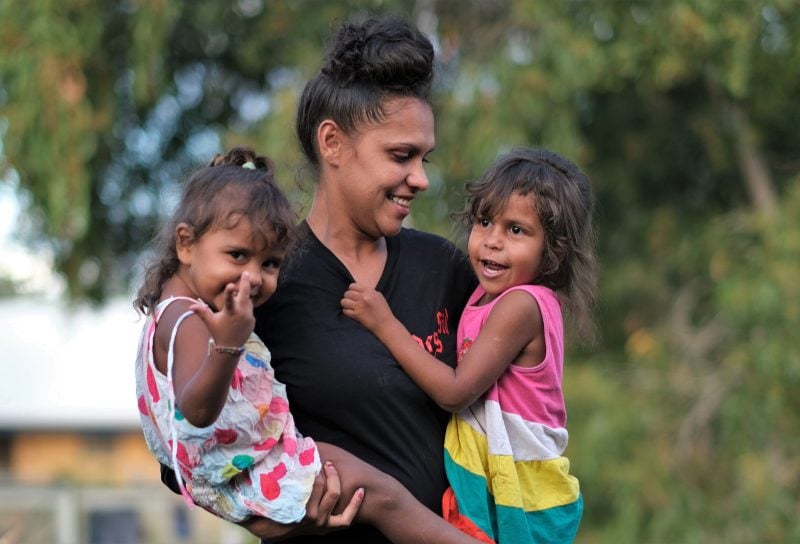
Family Matters Report 2025
Family Matters is Australia’s only annual report led by Aboriginal and Torres Strait Islander peoples that monitors government removal of Aboriginal and Torres Strait Islander children from families and examines what governments are doing to turn the tide on over-representation.
Family Matters 2025 is the tenth edition of the report. This year’s message is clear: invest in families, not crisis. The 2025 edition of the report warns that Australia’s child protection systems continue to prioritise late, punitive interventions rather than the early supports that families need to stay strong and together and that, despite years of commitments to reduce the over-representation of Aboriginal and Torres Strait Islander children in out-of-home care, progress has stalled.
For more than a decade, Family Matters has amplified calls from communities for accountability and contributed to real change, increased transparency about children and families’ experiences in the child protection system and helped drive national reform, including playing a key role in the establishment of the National Commissioner for Aboriginal and Torres Strait Islander Children and Young People.
Family Matters 2025 shows what works. Aboriginal and Torres Strait Islander community-controlled early intervention, prevention and family support programs that keep children safe and connected to kin, community, Country and culture. Case studies throughout the report demonstrate how Aboriginal and Torres Strait Islander led services are strengthening families, keeping children connected to culture and improving lifelong health, learning and wellbeing. However, these proven solutions remain critically underfunded while crisis-driven systems continue to receive the bulk of funding.
Family Matters Report 2025Key Findings in 2025
Family Matters Report 2025 finds that Aboriginal and Torres Strait Islander children continue to be disproportionately represented at all stages of child protection systems across Australia; systems that fail to keep children safe and connected to family, community and culture.
Family Matters 2025 finds that:
- Aboriginal and Torres Strait Islander children are 9.6× more likely to be in out-of-home care or on third-party parental responsibility orders than non-Indigenous children.
- Aboriginal and Torres Strait Islander infants are 8.9× more likely to be placed in out-of-home care than non-Indigenous infants.
- Only 7.3% of Aboriginal and Torres Strait Islander children in out-of-home care or on third-party parental responsibility orders were reunified with family, compared to 10.1% of non-Indigenous children.
- 37.6% of Aboriginal and Torres Strait Islander children exited out-of-home care to other circumstances, including independent living, homelessness and detention.
- Only 15.6% of total child protection expenditure was spent on family support services, meaning roughly 16 cents of every $1 is invested in prevention.
- Nationally (excluding WA), only 6.8% of child protection spending was directed to Aboriginal and Torres Strait Islander community-controlled organisations, with most jurisdictions spending under 10% of their child protection budgets through Aboriginal and Torres Strait Islander community-controlled organisations.
- 32.1% of Aboriginal and Torres Strait Islander children in out-of-home care were placed with Aboriginal and Torres Strait Islander relatives/kin.
These findings indicate that as a nation, we are still far from achieving Target 12 of the National Agreement on Closing the Gap — which aims for a 45% reduction in over-representation by 2031 — and that there is an urgent need for system-wide reform, greater investment in prevention and family support, and the scale-up of Aboriginal and Torres Strait Islander-led, community-controlled, culturally safe services to keep children safe in family, community and culture.
Family Matters 2025 Data SnapshotOur children are strong, loved and full of potential
In this tenth edition of Family Matters, we affirm what we have always known: Aboriginal and Torres Strait Islander children are strong, loved and full of potential. They are deeply loved by their families, Elders and communities; a love that may not always be recognised within mainstream systems but remains strong and enduring, shaping confident, connected and culturally grounded children.
Over the past decade, Family Matters has amplified the strength of communities, highlighted what works and shown that when Aboriginal and Torres Strait Islander families are supported through culturally safe, community-led approaches, children thrive. Yet despite this strength, there remains an unacceptable gap between reform promises and the lived realities of children and families. Closing the gap demands genuine partnership, structural change and bold action.
Family Matters 2025 calls on governments to honour their Closing the Gap commitments by transferring power and resources to Aboriginal and Torres Strait Islander communities. This includes:
- Guaranteeing equitable access to culturally safe, community-led early years and family support services.
- Transferring authority and decision-making to Aboriginal and Torres Strait Islander people and organisations, including legislated Aboriginal and Torres Strait Islander led family decision-making and youth participation frameworks.
- Ensuring culturally safe and responsive laws, policies and practices that uphold the Aboriginal and Torres Strait Islander Child Placement Principle, end adoption from out-of-home care and strengthen reunification supports.
- Building transparency and accountability through Aboriginal and Torres Strait Islander peak bodies and Commissioners for Aboriginal and Torres Strait Islander children and young people in every jurisdiction, supported by stronger data to track progress and outcomes.
When children grow up connected to family, culture and Country, they thrive. To change the current trajectory of child safety systems, governments must act with urgency and in genuine partnership with Aboriginal and Torres Strait Islander families, communities and organisations. Only through community-led systems that keep children safe and families supported can all children grow up strong, safe and surrounded by their culture, kin and community.
Family Matters Building Blocks & 2025 Recommendations
Building Block One
Building Block Two
Building Block Three
Building Block Four
About the annual Family Matters Report
The Family Matters – Strong communities. Strong culture. Stronger children. annual report tracks progress towards ensuring Aboriginal and Torres Strait Islander children and young people grow up safe, cared for and connected to their families, communities, Country and culture. The annual publication examines what governments are doing to turn the tide on the over-representation of Aboriginal and Torres Strait Islander children in child protection systems across Australia.
Family Matters advocates for the safety, rights and wellbeing of Aboriginal and Torres Strait Islander children, including their right to be raised within family, community, Country and culture. The report highlights Aboriginal and Torres Strait Islander led solutions, presents evidence and recommendations and calls on governments to support and invest in the strengths of Aboriginal and Torres Strait Islander peoples to lead child wellbeing, development and safety responses.
The goal of Family Matters
The goal of Family Matters is for Aboriginal and Torres Strait Islander children and young people to grow up safe and cared for within their families, communities and cultures. Central to this is achieving Target 12 of the National Agreement on Closing the Gap: to reduce the rate of over-representation of Aboriginal and Torres Strait Islander children in out-of-home care by 45 per cent by 2031 and, ultimately, to eliminate over-representation within a generation by 2040.
Leadership and accountability
Family Matters is led by SNAICC – National Voice for our Children and a group of eminent Aboriginal and Torres Strait Islander leaders from across the country who form the Family Matters Leadership Group. Over the past decade the report has borne witness to system failures, amplified community calls for accountability and contributed to change, including stronger oversight and the appointment of Aboriginal and Torres Strait Islander Children’s Commissioners. However, there is still a long way to go.
Our urgent call to reduce over-representation
Family Matters calls for holistic, culturally safe support long before families come into contact with child protection. Without action on the underlying drivers of intervention — poverty, housing insecurity, systemic racism and exclusion from services — little will change. To change the current trajectory, governments must increase investment in prevention and family supports, and transfer authority for service design and delivery to Aboriginal and Torres Strait Islander communities. When communities lead and are properly resourced, children grow up strong, proud and safe in culture and community — exactly where they belong.
Resources

Submission to the UN Special Rapporteur on the Rights of Indigenous Peoples
April 2026
SNAICC’s submission to the UN Special Rapporteur on the Rights of Indigenous Peoples brings to light urgent need for child protection and youth justice reform to uphold the rights of Aboriginal and Torres Strait Islander children.
Download Submission to the Queensland Child Safety Commission of Inquiry
April 2026
Submission to the Queensland Child Safety Commission of Inquiry sets out a clear, evidence-based case for urgent and systemic reform of Queensland’s child protection system for Aboriginal and Torres Strait Islander children and families.
Download
Family Matters Report 2025: Strong, loved and full of potential
December 2025
Family Matters Report 2025 is the tenth edition of the report showing that while Aboriginal and Torres Strait Islander community-controlled early intervention, prevention and family support programs are keeping Aboriginal and Torres Strait Islander children safe and connected to family, they remain critically underfunded.
Download
Family Matters 2025 Data Snapshot
December 2025
Family Matters 2025 Data Snapshot finds that Aboriginal and Torres Strait Islander children continue to be disproportionately represented at all stages of child protection systems across Australia.
Download Family Matters Report 2024 Report Card
November 2024
The Family Matters Report 2024 Report Card shows the jurisdictional progress being made on the four Family Matters Building Blocks.
Download Family Matters Report 2024 Data Snapshot
November 2024
Family Matters Report 2024 Data Snapshot shows key findings, statistics and data of the 2024 Family Matters Report.
Download
Family Matters Report 2024
November 2024
Family Matters Report 2024 finds that child protection systems continue to fail Aboriginal and Torres Strait Islander children and families, exposing them to ongoing harm and trauma. A key focus of the Family Matters Report 2024 is the need for increased support for Aboriginal and Torres Strait Islander community-controlled services with calls for increased funding for ACCO-led prevention programs.
Download
Family Matters Report 2023
November 2023
Family Matters Report 2023 shows that child protection systems continue to fail Aboriginal and Torres Strait Islander children, with the number of Aboriginal and Torres Strait Islander children entering out-of-home care continuing to rise, exposing them to ongoing harm and trauma. This report highlights, in particular, Aboriginal-led solutions to what is working best for our children and communities.
Download Family Matters Report 2023 Report Card
November 2023
The Family Matters Report 2023 Report Card shows the jurisdictional progress being made on the four Family Matters Building Blocks.
Download Family Matters Report 2023 Data Snapshot
November 2023
Family Matters 2023 Report Data Snapshot shows key data from Family Matters 2023 Report and calls for investment in community-led solutions to eliminate the over-representation of our children in out-of-home care.
Download Family Matters Data Snapshot 2022
November 2022
Data snapshot on the Family Matters 2022 annual report.
Download
Family Matters Report 2022
November 2022
Family Matters Report 2022 is the third to be published following the development of the new National Agreement on Closing the Gap and, on the 25th Anniversary of the Bringing Them Home Report, most recommendations remain unrealised.
DownloadSubscribe to the SNAICC Mailing List
Join Us
Be part of our advocacy efforts and stay informed about our initiatives.
Become a member today and add your voice to the cause.