


Pressure is mounting on the Prime Minister to act on youth incarceration, SNAICC launched our Sector Transformation Principles Framework and our Chair, Aunty Muriel Bamblett AO spoke with Larissa Behrendt about the launch of Our Ways Strong Together.
Here is a look at where the conversation has been, 28 March – 10 April 2026.
Calls grow for a national response to act on youth incarceration crisis
The National Indigenous Times reported this week on the growing pressure on the Prime Minister to respond to the youth incarceration crisis, referencing our call for a nationally coordinated response. NATSILs released an open letter signed by more than 200 organisations and leaders, including SNAICC, calling for an emergency national summit on youth justice.
We have long called for the Commonwealth to take a leadership role in reforming youth justice systems that are failing Aboriginal and Torres Strait Islander children. Aboriginal and Torres Strait Islander children are 26 times more likely than non-Indigenous children to be incarcerated, and despite making up only 5.7 per cent of the 10 to 17 year old population, they comprise 63 per cent of children in detention.
Catherine Liddle said:
“In a crisis, you cannot keep dismissing child justice as exclusively a state and territory issue. We strongly urge the Australian Government to take forward these recommendations with urgency equal to the seriousness of the crisis.”
Earlier this year, Catherine Liddle gave evidence to the Senate Inquiry into Australia’s Youth Justice and Incarceration System, calling on the Commonwealth to develop a nationally coordinated action plan with the states and territories. The NATSILs open letter adds to the growing consensus that the Commonwealth must act.
Read our media releaseTransformation Principles Framework Launched: A Roadmap for Sector Reform
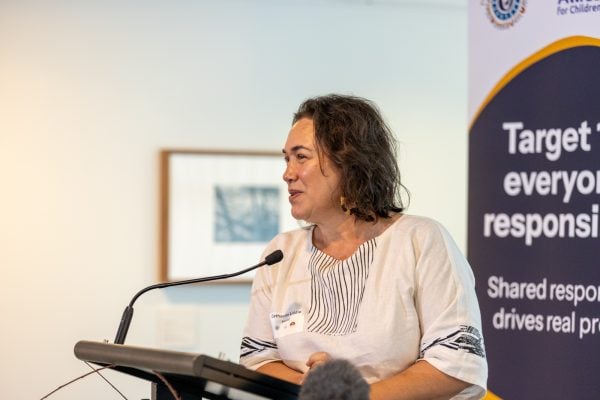
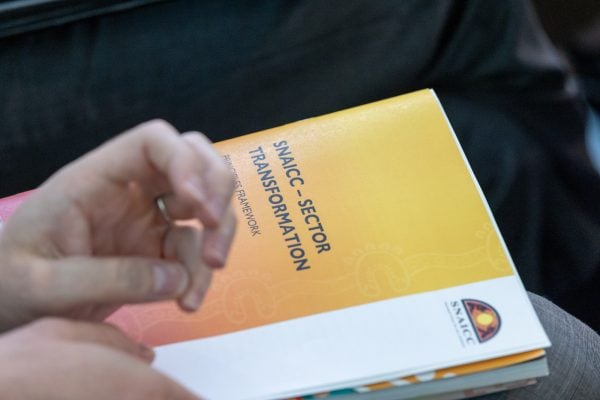
SNAICC launched the Sector Transformation Principles Framework in Canberra alongside the Allies for Children and the First Nations NGO Alliance at a Parliamentary Briefing.
The framework provides a roadmap for mainstream organisations to transition out-of-home care services to Aboriginal Community Controlled Organisations (ACCOs), placing self-determination, cultural authority and community control at the centre of child and family services.
The National Indigenous Times reported on the launch, noting that mainstream providers are being urged to commit to returning children to culture, community and kin. The Koorie Mail also covered the launch and the Allies for Children event.
The Family Matters 2025 report found that in 2023-24 across Australia, Aboriginal and Torres Strait Islander children were 9.6 times more likely to be in out-of-home care and on third-party parental responsibility orders, a 0.5% increase from 2022-23.The most recent Productivity Commission dashboard shows nationally in 2024, 44.5% of children aged 0–17 years old in out‑of‑home care were Aboriginal and Torres Strait Islander – an increase of 4.5 percentage points since 2019.
With just five years remaining to meet Closing the Gap Target 12, which seeks to reduce the rate of our children in out-of-home care by 45 per cent by 2031, progress has stalled nationally.
Catherine Liddle said:
The framework builds on the work of the Allies for Children, a coalition of child and family services organisations who have committed to transitioning services and resources to ACCOs. Allies for Children represent around 15 per cent of child and family services nationally and are collectively responsible for the care of approximately 1,900 Aboriginal and Torres Strait Islander children. Life Without
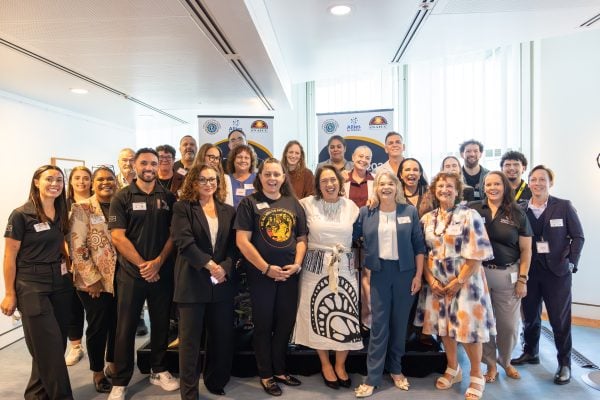 Barriers, one of the members of Allies for Children, shared a post of the event on their website.
“Closing the gap is everyone’s business. The Sector Transformation Principles Framework provides a roadmap to organisations who do not know where to begin their transformation journey.”
The framework builds on the work of the Allies for Children, a coalition of child and family services organisations who have committed to transitioning services and resources to ACCOs. Allies for Children represent around 15 per cent of child and family services nationally and are collectively responsible for the care of approximately
1,900 Aboriginal and Torres Strait Islander children. Life Without Barriers, one of the members of Allies for Children, shared a post of the event on their website.
For more on sector transformation, in the latest episode of Kids, Culture, Community: SNAICC Yarns, Nadia and Sid unpack the shift toward Aboriginal Community Controlled Organisations leading the design and delivery of services, and why this approach is so important for children, families and communities.
Or catch up with SNAICC Yarns here
Spotify | Apple Podcasts | Podcast Index
Tune in on your preferred podcast platform and be sure to subscribe and share the podcast to help amplify the voices of Aboriginal and Torres Strait Islander children, families and communities.
Read the Sector Transformation Principles Framework.
Read our media releaseMuriel Bamblett AO Speaks on Our Ways Strong Together
SNAICC Chair Muriel Bamblett AO joined Larissa Behrendt on ABC’s Speaking Out to discuss the launch of Our Ways Strong Together, the new Aboriginal and Torres Strait Islander national peak body for family, domestic and sexual violence.
Aboriginal and Torres Strait Islander women are seven times more likely to be victims of intimate partner homicide and 27 times more likely to be hospitalised due to family violence than non-Indigenous women. Our Ways Strong Together brings together Aboriginal community-controlled organisations, including specialist family, domestic and sexual violence services, legal and health services and peak bodies, under a national umbrella to address this crisis.
As we noted when we welcomed the launch of the Our Ways – Strong Ways – Our Voices national plan earlier this year, a child protection system that responds after violence has occurred is not enough. Safety starts earlier, with family support, healing and culturally grounded programs that keep children connected to family and community.
Learn more about the plan