Aboriginal and Torres Strait Islander Children’s Cultural Needs
Published 2012
“Cultural knowledge needs to be in the control
of Aboriginal and Torres Strait Islander people so
that our children’s cultural needs are met”
Introduction
The Aboriginal and Torres Strait Islander Children’s Cultural Needs project is based on the development of a cultural needs diagram, which evolved from a research report into assessment tools that measured the social and emotional wellbeing of Aboriginal and Torres Strait Islander children. The report identified that one of the major gaps in current assessment tools is in the capacity to assess cultural connection and in building an evidence base on how disconnection impacts on Aboriginal and Torres Strait Islander children’s wellbeing. In the report the literature emphasised ‘culture’ as a strong factor in enhancing wellbeing, without always clearly defining what ‘culture’ or more specifically, ‘cultural work’, means.
This resource attempts to ‘unpack’ what Aboriginal and Torres Strait Islander people mean when they refer to culture and cultural needs. Further, it has been observed that there may be some fear among those who work with Aboriginal and Torres Strait Islander children of ‘doing the wrong thing’ or uncertainty about ‘where to start’ when attempting cultural work with Aboriginal and Torres Strait Islander children.
Strengthening Aboriginal and Torres Strait Islander children’s connection to their culture requires a degree of cultural awareness. The desire to ‘do no harm’ may immobilise workers. However, a lack of awareness of the possibility of doing harm is an even greater risk.
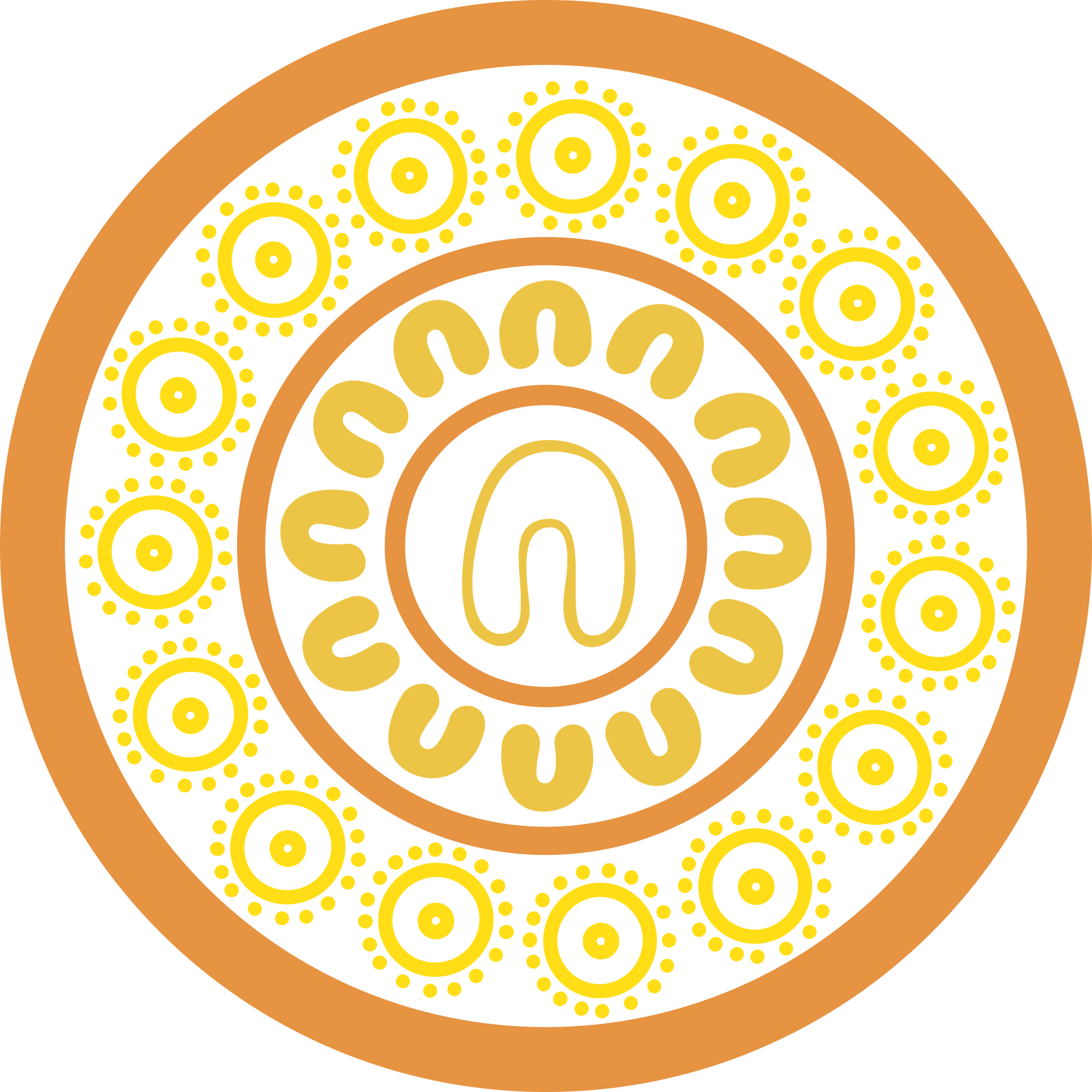
Cultural work has many elements. The information outlined in many of the elements is represented in the cultural needs diagram(over page), relating to meeting the needs of Aboriginal and Torres Strait Islander children around cultural connection.