


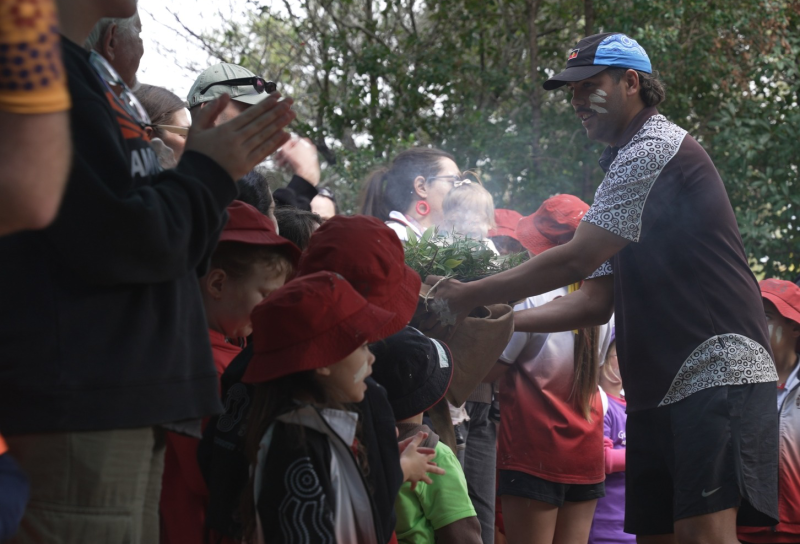
Our Role in Child and Family Wellbeing
A core area of SNAICC – National Voice for our Children’s work is transforming child and family safety and wellbeing systems so that Aboriginal and Torres Strait Islander children and families across Australia are supported by culturally safe, accessible and effective services at every stage of life.
Child and family wellbeing is fundamental for children’s safety, development and lifelong outcomes. Aboriginal and Torres Strait Islander community-controlled organisations play an important role in achieving the best possible outcomes for Aboriginal and Torres Strait Islander children and families. Evidence consistently shows the benefits of Aboriginal and Torres Strait Islander child-rearing practices, the effectiveness of culturally led solutions and the protective role of cultural identity, connection and belonging in the safety and wellbeing of children and young people.
SNAICC actively engages in legislative reform and policy development, producing research and policy advice while collaborating with governments, the Aboriginal and Torres Strait Islander community-controlled sector and communities to design, implement and monitor evidence-based reforms. Our work is grounded on the central role of family, community, culture and Country, and we advocate for culturally safe child and family welfare systems that are community-led and self-determined. We prioritise prevention, early intervention and family-led decision-making, working to create environments in which children are safe, nurtured and supported to thrive.
Our holistic approach to child and family wellbeing recognises the interconnected nature of children’s lives and brings together safety, health, mental health, culture, housing and environment, education, empowerment and economic wellbeing, including access to culturally safe maternal and prenatal care. A key strategic priority is strengthening shared decision-making and partnerships with governments to progress national policy commitments such as Safe and Supported: the National Framework for Protecting Australia’s Children, the National Plan to End Violence Against Women and Children, and the Aboriginal and Torres Strait Islander Child Placement Principle.
Through our work in Child and Family Wellbeing, SNAICC contributes to systems change that strengthens families, upholds the rights of children and young people and supports Aboriginal and Torres Strait Islander children to grow up safe, strong in culture and supported by self-determined communities.
Our Projects
Family Matters
The Family Matters annual report examines government action to address the over-representation of Aboriginal and Torres Strait Islander children in child protection and tracks progress toward ensuring Aboriginal and Torres Strait Islander children grow up safe, cared for and connected to family, community, Country and culture.
Family Matters
The Child Placement Principle
The Aboriginal and Torres Strait Islander Child Placement Principle is a national framework that affirms and protects the rights of Aboriginal and Torres Strait Islander children, families and communities by ensuring culture, family, community and Country are central to child protection decision-making and embeds self-determination in national child welfare law, policy and practice.
The Child Placement Principle
Safe & Supported
Safe and Supported is Australia’s ten-year national framework for child and family wellbeing, setting out how all governments, Aboriginal and Torres Strait Islander leaders and the non-government sector can work together to keep children safe by strengthening families, supporting communities and addressing the systems that place children at risk of harm.

Improving Multidisciplinary Responses Program
The Improving Multidisciplinary Responses Program is a national initiative that places Aboriginal and Torres Strait Islander cultural knowledge at the centre of how child and family services are designed and delivered, supporting community-led service models that strengthen family wellbeing, improve access to early support and reduce unnecessary engagement with child protection systems.
IMR Program.svg)
Our Ways – Strong Ways – Our Voices
Our Ways – Strong Ways – Our Voices: National Aboriginal and Torres Strait Islander Plan to End Family, Domestic and Sexual Violence 2026–2036 is Australia’s first dedicated, stand-alone national plan to address family, domestic and sexual violence against Aboriginal and Torres Strait Islander women and children.
Family Safety PlanVideo Description
Why Child and Family Wellbeing Matters
For Aboriginal and Torres Strait Islander children and young people, safety and wellbeing are deeply connected to family, community, culture and Country.
The over-representation of Aboriginal and Torres Strait Islander children in child protection systems causes lasting harm to children, families and communities and perpetuates a cycle of harm and trauma. Despite the strengths of Aboriginal and Torres Strait Islander families and communities, these strengths continue to be undermined by a deepening crisis of child removal.
Supporting strong, healthy and self-determined children requires a fundamental transformation of Australia’s child protection systems. When families are supported early, when communities have control over decisions that affect them and when culturally safe services are accessible, children and families experience better outcomes. Addressing systemic bias, investing in prevention and early intervention, healing intergenerational trauma and tackling the impacts of poverty are essential to achieving lasting change.
Alignment with Closing the Gap
Closing the gap starts with our children.
SNAICC’s child and family wellbeing work is central to delivering the National Agreement on Closing the Gap and improving outcomes for Aboriginal and Torres Strait Islander children and families. Our work aligns with the Priority Reforms, particularly strengthening shared decision-making and building the Aboriginal and Torres Strait Islander community-controlled sector. We advocate for reforms that reduce the over-representation of Aboriginal and Torres Strait Islander children in child protection systems and increase access to culturally safe, community-led supports for families.
Through policy reform, advocacy and partnership with governments, we work to ensure Closing the Gap commitments translate into tangible improvements in children’s safety and wellbeing. This includes increasing access to high-quality, culturally safe supports, addressing inequities in child protection system and embedding accountability to Aboriginal and Torres Strait Islander communities. By centring self-determination and community leadership, our work contributes to the long-term vision of Closing the Gap: strong children, strong families and thriving, self-determining communities.
Resources

Submission to National Plan to End Violence Against Women and Children Second Action Plan
August 2026
SNAICC's Submission to National Plan to End Violence Against Women and Children Second Action Plan (August 2026).
Download
Meeting of Shared Decision-Making Committee Communique
July 2026
Safe and Supported Meeting of Shared Decision-Making Committee Communique (July 2026).

Early Childhood Care and Development Policy Partnership Annual Report 2025
July 2026
The Early Childhood Care and Development Policy Partnership Annual Report 2025 detailing activities across 2025.
Download Early Childhood Care and Development Policy Partnership Strategic Plan 2026–2028
July 2026
The Early Childhood Care and Development Policy Partnership Strategic Plan 2026–2028 details the Partnership's strategic vision over 2026 to 2028.
Download Doing things differently: Funding ACCOs to keep families together
July 2026
The Doing things differently: Funding ACCOs to keep families together report presents evidence-based funding model options for ACCOs delivering child and family support services.
Download Submission to Legislative Assembly of the NT Legislative Scrutiny Committee
May 2026
SNAICC's submission to Legislative Assembly of the NT Legislative Scrutiny Committee – Review of the Care and Protection of Children Legislation Amendment (Every Child Matters) Bill 2026.
Download Aboriginal and Torres Strait Islander Family-Led Decision Making: Summary Evidence Review
May 2026
The Aboriginal and Torres Strait Islander Family-Led Decision Making: Summary Evidence Review examines AFLDM implementation and outcomes for Aboriginal and Torres Strait Islander children, young people and families.
Download Submission to the Parliamentary Inquiry into Racism, Hate and Violence directed at Aboriginal and Torres Strait Islander people
May 2026
SNAICC's submission to the Parliamentary Inquiry into Racism, Hate and Violence directed at Aboriginal and Torres Strait Islander people.
Download National Child and Family Investment Strategy
April 2026
National Child and Family Investment Strategy is a shift towards culturally safe supports for Aboriginal and Torres Strait Islander children.
Download Submission to the UN Special Rapporteur on the Rights of Indigenous Peoples
April 2026
SNAICC’s submission to the UN Special Rapporteur on the Rights of Indigenous Peoples brings to light urgent need for child protection and youth justice reform to uphold the rights of Aboriginal and Torres Strait Islander children.
Download Submission to the Queensland Child Safety Commission of Inquiry
April 2026
Submission to the Queensland Child Safety Commission of Inquiry sets out a clear, evidence-based case for urgent and systemic reform of Queensland’s child protection system for Aboriginal and Torres Strait Islander children and families.
Download Yamagigu Consulting Evaluation Report: Evaluation of the Early Childhood Care and Development Policy Partnership
April 2026
The Evaluation of the Early Childhood Care and Development Policy Partnership undertaken by Yamagigu Consulting as part of a scheduled three-year review.
DownloadJoin Us
Be part of our advocacy efforts and stay informed about our initiatives.
Become a member today and add your voice to the cause.