


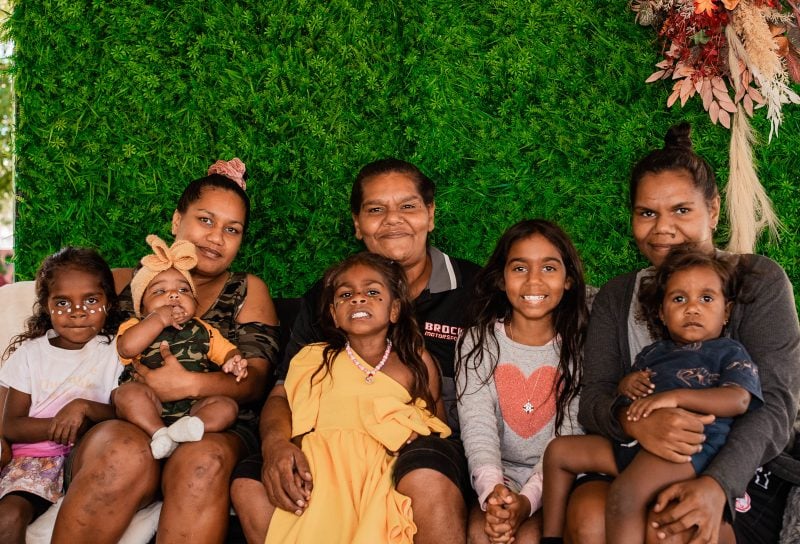
What is the Aboriginal and Torres Strait Islander Child Placement Principle?
The Aboriginal and Torres Strait Islander Child Placement Principle has been shaped by Aboriginal and Torres Strait Islander leaders and community-controlled child welfare organisations, emerging from grassroots advocacy in the 1970s in response to the profound harms caused by child removal policies, including those that led to the Stolen Generations, and was formally recognised in Australian child welfare legislation in the early 1980s.
The Aboriginal and Torres Strait Islander Child Placement Principle affirms that culture, family, community and Country are fundamental to the safety, wellbeing and identity of Aboriginal and Torres Strait Islander children. It recognises that Aboriginal and Torres Strait Islander families, communities and community-controlled organisations are best placed to make decisions about children’s care and protection and must be actively involved in every decision affecting their lives.
Across all Australian jurisdictions, the Aboriginal and Torres Strait Islander Child Placement Principle is embedded in legislation, policy and practice and is foundational to building a culturally safe national child protection system that uphold the rights of Aboriginal and Torres Strait Islander children, families and communities.
The Aboriginal and Torres Strait Islander Child Placement Principle aims to:
- embed culture as central to the safety and wellbeing of Aboriginal and Torres Strait Islander children,
- uphold the rights of Aboriginal and Torres Strait Islander children, families and communities in contact with child welfare systems,
- strengthen self-determination for Aboriginal and Torres Strait Islander people in child protection decision-making,
- reduce the over-representation of Aboriginal and Torres Strait Islander children in out-of-home care and the broader child protection system, and
- support family-led decision-making, prevent unnecessary entry into care and promote family reunification where separation occurs.
The Child Placement Principle comprises five interrelated elements; Prevention, Partnership, Placement, Participation and Connection, which must be applied together to realise the full intent of the Principle. By centring prevention, cultural connection, community leadership and self-determination, the Child Placement Principle supports stronger connections for children and families and contributes to reducing over-representation of Aboriginal and Torres Strait Islander children in child protection systems.
Continue reading to find out more about the elements or use the link to find SNAICC’s Implementation Reviews that assess how well governments are applying the full intent of the Aboriginal and Torres Strait Islander Child Placement Principle in legislation, policy, programs and practice.
The Five Elements of the Child Placement Principle
Prevention
Partnership
Participation
Placement
Connection
Implementation and Progress Reporting
Across jurisdictions, the Aboriginal and Torres Strait Islander Child Placement Principle continues to inform legislation, policy, practice frameworks and accountability mechanisms, affirming the rights of Aboriginal and Torres Strait Islander children, families and communities and supporting community-led approaches to child safety and wellbeing.
However, despite the Child Placement Principle being embedded in legislation, policy and practice frameworks across all Australian states and territories, implementation remains poor and incomplete. Research and system reviews consistently show that many child protection systems focus narrowly on placement decisions, often overlooking the full intent of the five interrelated elements; Prevention, Partnership, Placement, Participation and Connection. This narrow focus undermines the holistic, culturally grounded approach the Child Placement Principle requires.
Several key barriers to meaningful implementation have been identified across jurisdictions, including, but not limited to:
- ongoing and entrenched over-representation of Aboriginal and Torres Strait Islander children in out-of-home care,
- inconsistent involvement of Aboriginal and Torres Strait Islander families and community organisations in decision-making,
- limited quality cultural care planning, and
- systemic gaps in understanding and measuring progress across all five elements of the Child Placement Principle.
Current progress reporting, coordinated by the Australian Institute of Health and Welfare, shows that available, nationally consistent data relate primarily to only the Placement and Connection elements, while Prevention, Partnership and Participation are currently under development. The last update to the Indicators Report was
Implementation Reviews
SNAICC publishes regular Implementation Reviews that assess how governments are applying the full intent of the Child Placement Principle in legislation, policy, programs and practice.
Across the Implementation Reviews, SNAICC finds:
- ongoing over-representation of Aboriginal and Torres Strait Islander children in out-of-home care,
- insufficient investment in culturally safe early intervention and intensive family support services,
- significant gaps in implementation of the five elements,
- inconsistent systems for meaningful family and community involvement in decision‑making, and
- the need for sustained resourcing of Aboriginal and Torres Strait Islander community-controlled organisations to lead culturally responsive responses and system reform.
The Implementation Reviews map progress and identify gaps across jurisdictions and hold governments to account to their commitments under Safe and Supported and the National Agreement on Closing the Gap.
View the Implementation ReviewsIndicators Report
The Indicators Report is coordinated by the Australian Institute of Health and Welfare, bringing together the latest national data to assess progress toward implementation of the Child Placement Principle. Indicators are grouped under the five core elements of the Principle and are designed to identify where improvements are needed across systems.
The report finds:
- persistent high rates of Aboriginal and Torres Strait Islander children in out-of-home care with only moderate proportions living in preferred placements such as with relatives, kin or other Aboriginal and Torres Strait Islander carers, and
- a significant proportion of children in care with current approved cultural support plans, recognising culturally appropriate planning as key to connection
The report shows that Indicators for Prevention, Partnership and Participation are currently under development, and that nationally consistent data relate primarily to only the Placement and Connection elements.
View the latest Indicators ReportHistory and Legislative Status of the Child Placement Principle
The Aboriginal and Torres Strait Islander Child Placement Principle was developed through sustained advocacy by Aboriginal and Torres Strait Islander leaders, families and community-controlled child welfare organisations in the 1970s to respond to the devastating impacts of child removal policies, including those that led to the Stolen Generations.
The Child Placement Principle was formally recognised as a guiding principle in the early 1980s, first incorporated into Northern Territory child welfare legislation in 1983, and subsequently embedded into child protection and adoption laws in all Australian states and territories over the following decade.
Safe and Supported
Today, the Child Placement Principle is embedded not only in legislation and statutory policy frameworks across all jurisdictions but also in national child protection reform agendas. It is a central feature of Safe and Supported: the National Framework for Protecting Australia’s Children 2021–2031, Australia’s ten-year strategy to improve child safety and wellbeing, with a specific focus on addressing the over-representation of Aboriginal and Torres Strait Islander children in child protection and out-of-home care.
Safe and Supported was developed in partnership with Aboriginal and Torres Strait Islander leaders and organisations, including SNAICC, and recognises that meaningful change requires a shift away from crisis-driven and punitive responses toward prevention, early intervention and family-led solutions grounded in culture, community and self-determination.
Complementing the Safe and Supported framework, the Safe and Supported: Aboriginal and Torres Strait Islander First Action Plan 2023–2026 translates these commitments into agreed priority actions. The Action Plan embeds the five interrelated elements of the Child Placement Principle across implementation priorities, strengthening accountability for governments and systems to work in genuine partnership with Aboriginal and Torres Strait Islander communities and to support culturally safe, community-controlled approaches to child and family wellbeing.
Family Matters
The Family Matters annual report produced by SNAICC – National Voice for our Children examines government action to address the over-representation of Aboriginal and Torres Strait Islander children in child protection, and tracks progress toward ensuring Aboriginal and Torres Strait Islander children grow up safe, cared for and connected to family, community, Country and culture.
Since its first edition in 2016, Family Matters has amplified community voices, highlighted system failures and advocated for holistic, culturally safe responses that align with the intent of the Child Placement Principle. The report’s goal is for Aboriginal and Torres Strait Islander children to grow up safe, strong and connected to family, community and culture and, ultimately, to eliminate over-representation in out-of-home care within a generation. The report monitors progress against national commitments, such as Target 12 of the National Agreement on Closing the Gap, and meaningful implementation of the five elements of the Child Placement Principle across states and territories.
Family Matters 2025 is the tenth and most recent edition of the report. This report’s message is clear: invest in families, not crisis. The 2025 edition of the report warns that Australia’s child protection systems continue to prioritise late, punitive interventions rather than the early supports that families need to stay strong and together and that, despite years of commitments to reduce the over-representation of Aboriginal and Torres Strait Islander children in out-of-home care, progress has stalled.
Resources

Submission to Legislative Assembly of the NT Legislative Scrutiny Committee
May 2026
SNAICC's submission to Legislative Assembly of the NT Legislative Scrutiny Committee – Review of the Care and Protection of Children Legislation Amendment (Every Child Matters) Bill 2026.
Download
Aboriginal and Torres Strait Islander Family-Led Decision Making: Summary Evidence Review
May 2026
The Aboriginal and Torres Strait Islander Family-Led Decision Making: Summary Evidence Review examines AFLDM implementation and outcomes for Aboriginal and Torres Strait Islander children, young people and families.
Download Submission to the UN Special Rapporteur on the Rights of Indigenous Peoples
April 2026
SNAICC’s submission to the UN Special Rapporteur on the Rights of Indigenous Peoples brings to light urgent need for child protection and youth justice reform to uphold the rights of Aboriginal and Torres Strait Islander children.
Download Submission to the Queensland Child Safety Commission of Inquiry
April 2026
Submission to the Queensland Child Safety Commission of Inquiry sets out a clear, evidence-based case for urgent and systemic reform of Queensland’s child protection system for Aboriginal and Torres Strait Islander children and families.
Download Reviewing Implementation of the Aboriginal and Torres Strait Islander Child Placement Principle South Australia 2025
February 2026
Reviewing Implementation of the Aboriginal and Torres Strait Islander Child Placement Principle South Australia 2025 examines SA Government's efforts in implementing the full intent of the Child Placement Principle.
Download Reviewing Implementation of the Aboriginal and Torres Strait Islander Child Placement Principle New South Wales 2025
February 2026
Reviewing Implementation of the Aboriginal and Torres Strait Islander Child Placement Principle New South Wales 2025 examines NSW Government's efforts in implementing the full intent of the Child Placement Principle.
Download Reviewing Implementation of the Aboriginal and Torres Strait Islander Child Placement Principle ACT 2025
February 2026
Reviewing Implementation of the Aboriginal and Torres Strait Islander Child Placement Principle ACT 2025 examines ACT Government's efforts in implementing the full intent of the Child Placement Principle.
Download Reviewing Implementation of the Aboriginal and Torres Strait Islander Child Placement Principle Victoria 2025
February 2026
Reviewing Implementation of the Aboriginal and Torres Strait Islander Child Placement Principle Victoria 2025 examines Victoria Government's efforts in implementing the full intent of the Child Placement Principle.
Download Reviewing Implementation of the Aboriginal and Torres Strait Islander Child Placement Principle Northern Territory 2025
February 2026
Reviewing Implementation of the Aboriginal and Torres Strait Islander Child Placement Principle Northern Territory 2025 examines NT Government's efforts in implementing the full intent of the Child Placement Principle.
Download Reviewing Implementation of the Aboriginal and Torres Strait Islander Child Placement Principle Tasmania 2025
February 2026
Reviewing Implementation of the Aboriginal and Torres Strait Islander Child Placement Principle Tasmania 2025 examines Tasmanian Government's efforts in implementing the full intent of the Child Placement Principle.
Download Reviewing Implementation of the Aboriginal and Torres Strait Islander Child Placement Principle Queensland 2025
February 2026
Reviewing Implementation of the Aboriginal and Torres Strait Islander Child Placement Principle Queensland 2025 examines Qld Government's efforts in implementing the full intent of the Child Placement Principle.
Download Reviewing Implementation of the Aboriginal and Torres Strait Islander Child Placement Principle Western Australia 2025
February 2026
Reviewing Implementation of the Aboriginal and Torres Strait Islander Child Placement Principle Western Australia 2025 examines WA Government's efforts in implementing the full intent of the Child Placement Principle.
DownloadJoin Us
Be part of our advocacy efforts and stay informed about our initiatives.
Become a member today and add your voice to the cause.