


SNAICC in the News
9–15 May 2026
The Federal Budget has been revealed and SNAICC’s analysis finds it to be a real missed opportunity to back in community-led programs that our children and families want.
New child protection laws in the Northern Territory are threatening to water down the Child Placement Principle and over Mother’s Day, one of SNAICC’s Youth Voice advisory members shares the power of love, culture, kinship and how it shapes young mob.
Here is a look at where the conversation has been, 9–15 May 2026.
Aboriginal and Torres Strait Islander readers are advised that some of the links in this edition of SNAICC in the News contain the image of Kumanjayi Little Baby.
Federal Budget Falls Short for Aboriginal and Torres Strait Islander Children
Closing the gap starts with our children. For a budget aimed at addressing generational reform, for Aboriginal and Torres Strait Islander children and families, this budget is a missed opportunity to invest in the early years, family support and prevention programs that help our children thrive. The Budget should have backed them at the scale required.
As reported across ABC News, NITV and the National Indigenous Times, this budget had no commitment to secure the future of Early Years Support, a program that supports Aboriginal and Torres Strait Islander Community-Controlled Early Childhood Education and Care (ECEC) services to strengthen quality, workforce capability and cultural safety.
SNAICC also raised concerns about the security of some of the programs which our Aboriginal Community Controlled Organisations (ACCOs) ECEC’s rely on.
Speaking to ABC News, SNAICC’s CEO Catherine Liddle said:
“We are disappointed there is no funding commitment to secure the ongoing future of the critical Early Years Support program, despite strong evidence of the benefits the EYS is delivering to early education and care services.”
“SNAICC is [also] concerned about the future of the Inclusion Support programs, with no clear funding beyond the end of the year and a lack of clarity on how Thriving Kids will pick up the slack.”
Our Budget submission set out what investment looks like when Aboriginal and Torres Strait Islander children are the priority – programs aimed at family support and prevention, Early Childhood Education and Care through our ACCO-led services and long-term systems change. Too much of that work was left unfunded or uncertain, including the transition to developmental support such as Thriving Kids.
Thriving Kids matters because it could move developmental support away from crisis and diagnosis-driven systems and into places where our children already feel safe and strong, such as ACCO playgroups, early learning centres and child and family hubs.
Catherine Liddle has described Thriving Kids as a potential “Medicare Moment” for children, but only if Aboriginal and Torres Strait Islander children, families and ACCOs are designed into the system from the start.
Speaking to the National Indigenous Times, Catherine Liddle said Thriving Kids was an opportunity to ensure:
“all children have the supports they need as they start their learning journeys.”
But Catherine also said the budget did not recognise the need to invest differently:
“to ensure the children that are missing out on the support that they need are genuinely getting them.”
However, there were some bright spots in this budget. We welcomed the Department of Social Services (DSS) investment in the families and children program and hope most of this funding will be set aside for ACCOs.
We also strongly welcomed investment in Our Ways – Strong Ways – Our Voices, Australia’s first dedicated national plan to end family, domestic and sexual violence against Aboriginal and Torres Strait Islander women and children.
Speaking to NITV, Catherine Liddle said:
“This investment recognises what Aboriginal and Torres Strait Islander communities have always known, that lasting change comes when solutions are led by our people, grounded in culture, and designed with children, families and communities at the centre.”
Government policies, not the community, to blame for situation in town camps
The gap between budget announcements and children’s everyday safety is not an abstract, and the need for investment is clear. In the wake of the passing of Kumanjayi Little Baby, the ABC reported the impacts on the ground and residents of the town camps are sick of “bandaid” solutions and want safe homes.
Safe housing is part of keeping children safe. When governments fail to invest in housing, prevention and community-led supports, families and communities are left carrying the consequences of policy failure.
Catherine Liddle reiterated that town camps should not be criticised for the death of Kumanjayi Little Baby:
Read the media release“To blame town campers for poverty, to blame town campers for massive policy and social failures, is not fair. That blame sits fair and squarely with government.”
Child Protection Reform Must Be Led by Aboriginal Expertise
The Northern Territory Government risks repeating the failures of the past by refusing to consult with Aboriginal leadership, expertise and lived experience.
That is the message reported this week by NITV, the National Indigenous Times and the Guardian as the NT Government introduced amendments to the child protection legislation that would weaken the Aboriginal and Torres Strait Islander Child Placement Principle.
The Guardian reported on the joint statement from SNAICC and Aboriginal Peak Organisations Northern Territory, representing more than 330 ACCOs, calling on the NT Government to scrap the proposed legislation.
SNAICC CEO Catherine Liddle said changes to the NT child protection system are urgent, but too important to be reactive. With more than 90 per cent of children in out-of-home care in the Northern Territory being Aboriginal, reform without Aboriginal leadership risks repeating the failures of the past.
The National Indigenous Times reported SNAICC CEO Catherine Liddle’s call for any review to occur in:
“Genuine partnership with Aboriginal community-controlled organisations, leaders and Commissioners who understand the realities facing children and families on the ground.”
SNAICC has also joined calls from the National Commissioner for Aboriginal and Torres Strait Islander Children and Young People and the Northern Territory Children’s Commissioner for an independent Board of Inquiry for to examine why previous reforms have not been delivered:
“An independent Board of Inquiry must examine not only the current system, but why previous recommendations have not been implemented and what is needed to finally deliver systemic change.”
The NT Government has introduced legislation that undermine the Aboriginal and Torres Strait Islander Child Placement Principle. The Child Placement Principle is a safety framework built on decades of evidence and designed to keep Aboriginal children connected to family, culture, and community. The National Indigenous Times reported the joint statement’s warning that these protections recognise connection to kin, culture, and Country as fundamental to a child’s wellbeing and identity.
As SNAICC’s CEO Catherine Liddle said:
“Connection to kin, community and culture is one of the strongest protective factors for our children.”
During the week, an ABC explainer broke down the proposed amendments, and the risks that will arise from the changes.
For decades, inquiries into the Territory’s child protection system have identified the same failures. Recommendations from Little Children are Sacred, State of Denial and the Royal Commission into the Protection and Detention of Children in the Northern Territory remain unmet.
In a National Indigenous Times analysis, SNAICC CEO Catherine Liddle said:
“The Child Placement Principle is not red tape, it is a safety framework built on decades of evidence, designed to keep Aboriginal children connected to family, culture and community, and to ensure the mistakes of the past are never repeated.”
The NT Government is already failing to meet its obligations under the Child Placement Principle. Weakening it further does not fix the system.
Read the media releaseJaharn Mundy-Drazevich on Love, Connection and Leadership
In celebration of Mother’s Day this year, the ABC reported on Jaharn Mundy-Drazevich, a proud Ngunawal and Yuin man and member of SNAICC’s Youth Advisory Group. His story showed how important kinship relationships and maintaining cultural connection are for Aboriginal and Torres Strait Islander children growing up in out-of-home care.

Selina Walker, a founding member of Yerrabi Yurwang Child and Family Aboriginal Corporation and secretary of SNAICC’s Board of Directors, was 29 years old when she made the decision to be a kinship foster parent.
“When I was told that they were going to have to go to foster care because I couldn’t find any other kinship carers, that’s when I decided that I would take [Jaharn] into my care.”
Jaharn says that Selina’s unconditional love is the reason for his leadership and commitment to help Aboriginal and Torres Strait Islander youth.
“I want to do a bachelor’s degree in social work and to work in the care and protection role or as a caseworker.”
“I want to help them and be a stable guide and mentor.”
But it could have turned out differently, as Jaharn reflected on his early life.
“If she wasn’t there, I honestly don’t know where I would have ended up.”
“I’ve gone through a lot of mental health challenges.”
“I always tell everyone that I’m a proud blackfella but growing up and not knowing who my family was and where we actually came from … that sense of identity wasn’t always [as] clear as it is today.”
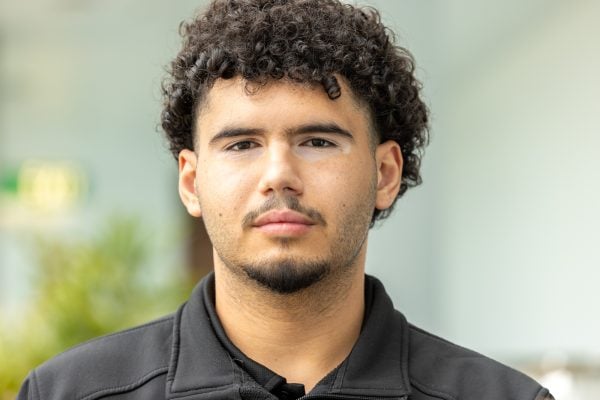
Today, Jaharn is helping shape SNAICC’s Youth Voice initiative, bringing the knowledge of young people into decisions that affect Aboriginal and Torres Strait Islander children and families.
In March this year, Jaharn spoke to federal politicians in Canberra at a Parliamentary Briefing on Target 12 of Closing the Gap. The event was held in partnership with SNAICC, Allies for Children and the First Nations NGO Alliance. Allies for Children is a collective of non-Indigenous child protection providers working with SNAICC to support the transition of services and resources to ACCOs.
At the event, SNAICC’s CEO Catherine Liddle spoke about the role of kinship in building strong and healthy identities:
“There is a way to make that easier for children and that is by ensuring they have connections to who they are, and they know there are people behind them who love them for who they are.”
For Jaharn, Selina Walker’s decision to be a kinship carer gave him inspiration and confidence to pursue a bachelor’s degree in social work and work with and mentor young people. In his words, Selina is:
“One of the strongest parental figures, not just in my life, but in the wider community.”
At SNAICC, Jaharn’s story is testament to what our CEO Catherine Liddle calls ‘grandmothers’ law.’ The love and strength that they provide our children are what transforms lives.
To all the grandmothers, mothers, sisters and aunties across the country, you are all deadly.
Read our media release here